Visit our Library and download Free exclusive e-books — click to discover and begin reading.
Is Oud Sunnah?
Is Oud Sunnah? A Perfumer Reads the Evidence Before Answering
People ask me is oud sunnah as though the answer should fit on a perfume label. I understand why. Oud is woven through Muslim homes, Friday gatherings, weddings, hospitality and memory. Many of us first recognize it not from a bottle but from smoke moving through a room while elders prepare to receive guests.

My short answer is yes, with one important distinction. Wearing a pleasant fragrance is supported by the Sunnah, and an authentic report in Sahih Muslim specifically describes aloeswood being used for fumigation. That does not mean every modern fragrance marketed with the word “oud” is natural agarwood, nor does it make every marketing claim a religious ruling.
That is the foundation of any responsible discussion of oud in Islam: begin with the evidence, then identify the material being discussed.
I am writing as a perfumer, not issuing a fatwa. I can explain the material, the wording of the reports and the difference between real oud, oud incense and an oud accord. For personal rulings or a situation involving gender, public fragrance, ihram or a school of law, I would ask a qualified scholar who understands that context.
Is oud Sunnah? The answer in one minute
The broad practice is clear: good fragrance was beloved, and using perfume is encouraged in established situations such as Friday prayer. There is also specific evidence for aloeswood. Sahih Muslim 2254 reports that Ibn Umar used unmixed aloeswood, or aloeswood with camphor, for fumigation and said that this was how the Messenger of Allah fumigated.
That is stronger and more precise than saying merely that oud is “cultural.” It connects aloeswood incense to a reported Prophetic practice. At the same time, the narration describes fumigation with aloeswood. It does not say that a synthetic amber-wood perfume sold today is botanically identical to that wood.
For the primary report itself, read Is Oud Sunnah?. The source matters more than a retailer repeating the conclusion.
Watch this before the deeper explanation
The first mistake I avoid when answering
Before discussing a religious association, I identify the material honestly: wood, distilled oil or a composed perfume accord.
In perfumery, one word can name three different things.

- Oud can mean resin-rich agarwood burned as incense.

These are related, but they are not interchangeable. Classical English translations often use “aloeswood.” Arabic discussions may use al-‘ud, al-uluwwah or related forms according to the text and translation. In the fragrance market, “oud” has become much broader. It can appear on a bottle containing real oud oil, a small trace of oud, or no natural agarwood at all.
When I am asked is oud sunnah, I first ask what “oud” means in that sentence. If we mean the pleasant use of authentic aloeswood incense described in Sahih Muslim, we have direct textual evidence. If we mean wearing a pleasant perfume before Friday prayer, we have evidence for fragrance more generally. If we mean a modern fantasy accord, we should not borrow the history of natural agarwood without explaining what is actually in the composition.

What the hadith says about perfume
The practice begins with cleanliness and a considerate amount of fragrance, not with display.

Sunan an-Nasa’i 3939 records that perfume was made dear to the Messenger of Allah, with comfort placed in prayer. The report is graded Hasan on Sunnah.com. I read this as part of a larger ethic: cleanliness, consideration and the human effect of a beautiful smell.
You can check that wording through is oud sunnah. I prefer to give the reference because religious language becomes careless when a familiar saying is repeated without its source or grade.
Perfume in the Sunnah is not simply a luxury category. It is connected with presenting oneself cleanly and avoiding offence to others. That purpose also gives us a practical limit. A fragrance that overwhelms a shared room, causes discomfort or becomes an exercise in showing off has lost the courtesy that made pleasant scent meaningful.
Friday fragrance and preparation
Sahih al-Bukhari 880 records the instruction regarding bathing on Friday, using the tooth-stick and applying perfume if available. The hadith does not require oud as the only fragrance. It supports the broader Sunnah of arriving clean and pleasantly scented.

The report can be checked at Is Oud Sunnah?. I would rather say, “fragrance for Friday is established, and oud is one historically attested material,” than turn a rich tradition into a sales slogan.

The specific evidence for aloeswood
The strongest direct point is Sahih Muslim 2254. Nafi’ reports that when Ibn Umar used incense, he used aloeswood without mixing it, or added camphor to the aloeswood. He then said this was how the Messenger of Allah used fumigation.

This report answers more than a vague question about “nice smells.” It names aloeswood and describes a method. In other words, agarwood in hadith is not a later marketing invention. The fragrant wood was known and used.
The translation says “fumigated.” That word is important. It refers to scenting through smoke, not necessarily wearing a distilled oud oil on the wrist. Distilled oud oil belongs to the same botanical family of material, but the exact action recorded in this narration is the use of fragrant wood as incense.
What I will not claim from the report
I will not claim that oud smoke “purifies” a room in a medical or disinfecting sense because this narration does not establish that scientific claim. I will not recommend inhaling smoke as therapy. Smoke can irritate some people, and ventilation matters.


I will also not turn the hadith into a blanket endorsement of every object sold as bakhoor. Bakhoor can be natural wood, scented chips, resins, blended incense or material heavily perfumed with a synthetic composition. Its religious association does not certify its ingredients.


Is oud Sunnah as oil, incense or perfume?
Here is the honest way I separate the formats.
|
Form |
What it is |
Connection to the evidence |
What to verify |
|---|---|---|---|
|
Agarwood incense |
Resin-rich wood heated for its aroma |
Directly connected to the aloeswood fumigation report |
Genuine material, safe burner, ventilation |
|
Natural oud oil |
Oil distilled from resin-rich agarwood |
Same natural source, but a different preparation and method |
Botanical origin, purity, distillation and seller transparency |
|
Oud attar |
Oil perfume that may include oud with other natural materials |
Fits the broader use of pleasant fragrance; formula varies |
Whether real oud is present and what “attar” means to the maker |
|
Oud accord |
A composition designed to smell oud-like |
Can serve as pleasant perfume, but may have no agarwood |
Ingredient claims, wording and honest labeling |
|
Scented bakhoor |
Wood chips or incense perfumed with a blend |
Used culturally for scenting spaces; composition varies widely |
Smoke sensitivity, ingredients and safe use |
Natural oud oil is the aromatic essence obtained by distilling agarwood. It can be worn in a tiny amount and remain close to the skin. It is not the same object as a burning piece of aloeswood, although both begin with resin-rich Aquilaria wood.
An oud accord is different again. A perfumer may combine cypriol, labdanum, woods, smoke, leather effects, amber materials and musks to create an oud impression. A skillful accord can be beautiful. It should simply be described as a composition rather than presented as proof that natural agarwood is in the bottle.

What natural oud smells like in my experience
The dark resin within agarwood creates the material’s complexity; “oud” is not simply a generic woody note.

I have never found one sentence that describes every natural oud. A Hindi distillation may feel earthy, leathery and animalic. A Cambodian oil can move through sweet resin, warm wood and fruit-like shadows. A Hainan profile may be bitter, medicinal, green or cooling. The tree, resin, region, age, soaking and distillation all shape the result.
This variation matters to the religious question because it reminds us that oud is a real natural material, not a single standardized smell. The aloeswood in an early report would have had the irregularity of harvested wood. It would not have smelled like every modern “oud” candle, spray or amber-wood perfume.

I sometimes place natural oud oil on one blotter and a commercial oud accord on another. The accord may be smooth and immediately recognizable. The oil often moves in less predictable stages. Neither observation creates a legal ruling. It simply protects the material from being reduced to a name.


Oud, musk and the best perfume
Sahih Muslim 2252 records the statement that musk is the best perfume. That tells us something useful: the tradition does not require us to pretend oud is the only noble material. Musk, aloeswood and perfume more generally appear in different reports and contexts.
Read the musk reference through is oud sunnah. In a careful article, evidence should clarify the hierarchy of claims rather than be collected only to decorate a product description.
Historical musk and modern “musk” also require care. Traditional animal musk, botanical musk-like materials and synthetic musk molecules are not identical. The same honesty we apply to oud should apply to musk: name the material, explain the format and avoid letting one familiar word do too much work.


People sometimes search for an attar for Jummah when what they really need is a considerate fragrance they understand. An attar can be a fine choice, but the Friday evidence concerns pleasant perfume generally rather than one modern product format.

Does using oud earn a reward?
This is where I step carefully. Intention matters in worship, and legal judgments are not mine to manufacture. A person may use fragrance because it is pleasant, because it is part of Friday preparation or because they intend to follow an established Sunnah. Those are not necessarily the same intention.
What I can say is that the use of pleasant scent is supported, and aloeswood fumigation has a specific report. I cannot promise a customer a particular reward for buying a particular bottle. No shop should make commerce sound like a guaranteed religious transaction.
The safer sentence is: using a permissible pleasant fragrance in an appropriate way can align with the Sunnah of good scent. Authentic aloeswood also has a direct historical connection through Sahih Muslim 2254. For the reward or ruling in an individual case, ask a scholar.
A note on women, men and public fragrance
Context changes the question: personal use, the home, a private gathering and public spaces are not automatically treated alike.
Many short commercial blogs say “everyone should wear oud” and stop there. That is too simple. Islamic discussions of fragrance can distinguish between men and women, private and public settings, intention, strength of scent and the possibility of attracting attention. Scholars and schools may explain the details differently.
I will not compress those discussions into a product recommendation. In the home, between spouses or at a private gathering, the context is different from wearing a projecting fragrance in public. For an individual ruling, especially where a scent is noticeable to non-mahrams, consult a qualified scholar you trust.

The perfumer’s contribution is practical: concentration and application control projection. A pure oil can be applied in a trace and kept intimate. Incense fills a room and affects everyone inside it. An alcohol spray may radiate much farther than a close-wearing oil. Format changes the social effect, so it belongs in the conversation.

Is alcohol-free perfume more Sunnah?
Not automatically. Natural oud oil is alcohol-free because it is oil, but the presence or absence of perfumer’s alcohol does not by itself prove that a fragrance is more sincere, more natural or more religiously correct. Juristic views on alcohol in perfume include technical distinctions, and this is another area where a retailer should not pretend to replace scholarship.

From a perfumery perspective, oil and alcohol behave differently. Oil usually stays closer to the skin and unfolds slowly. Alcohol helps a composition lift and project. The carrier changes performance; it does not tell you whether the “oud” note comes from natural agarwood.

I choose natural oil when I want the material without a large alcohol structure around it. That is an artistic and material decision. If someone chooses an alcohol-based fragrance after following a trusted ruling, I do not use marketing language to question their worship.
How I would choose oud for Friday
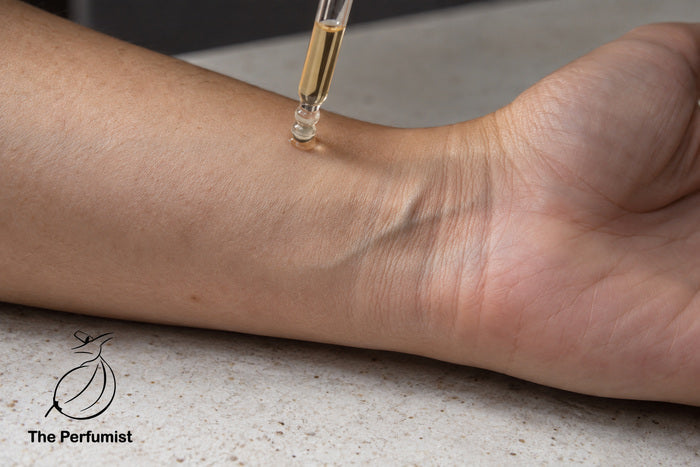
I would begin with cleanliness, not with strength. Then I would choose a fragrance that feels dignified and considerate in a shared prayer space. With pure oud oil, one small swipe may be enough. I would apply it at home and give it time to settle.

I would not burn incense inside a mosque without explicit permission. Fire rules, smoke detectors, ventilation, allergies and the comfort of other worshippers matter. The fact that aloeswood was historically used for fumigation does not remove the responsibility to follow the safety rules of a modern building.

After considering Is Oud Sunnah?, our application guide explains where to start with oud oil.
My simple Friday routine
1. Bathe and put on clean clothing.


2. Apply a trace of fragrance at home.
3. Let the perfume settle before entering a shared space.

4. Keep projection considerate.
5. Do not use smoke, charcoal or an incense burner where it is not permitted.
The routine is deliberately simple. The Sunnah of fragrance should not become a competition over price, rarity or who leaves the longest scent trail.
Natural agarwood, cultivation and responsibility
Respecting agarwood today includes lawful sourcing, cultivation and transparent claims.
A sacred association does not excuse careless sourcing. Agarwood comes from Aquilaria and related trees, and international trade in listed species is regulated through CITES. I keep the official CITES agarwood programme beside my own sourcing notes under the question is oud sunnah, because reverence for a material should also include responsibility for where it came from. Natural material should be traceable and legally sourced. Cultivated agarwood can help meet demand, although quality and resin formation still vary.

This is one reason I dislike vague luxury language. A product can say “rare oud” without naming origin, format or whether any natural oud is present. Religious imagery can make that ambiguity even more persuasive. Transparency is the more respectful path: say whether the product is wood, oil, attar, elixir or accord; say what can be documented; do not invent what cannot.

For readers who want to see a natural product format rather than a generic accord, the Hainan Oud product photograph above shows a real The Perfumist bottle rather than a generated or competitor-branded container.
Common claims I would correct
“Every oud perfume is Sunnah”
Too broad. Pleasant fragrance is encouraged, and aloeswood fumigation is specifically reported. But a modern oud perfume may be an accord with no natural agarwood. Its permissibility and appropriate use depend on its ingredients and context, not only its name.

“The Prophet wore oud oil exactly as we do today”
The cited Sahih Muslim report describes aloeswood fumigation. I would not rewrite it as a modern rollerball application. Natural oud oil is related botanically, while the method is different.

“Oud smoke medically purifies the air”
That is not established by the fumigation narration. Enjoy the aroma responsibly, ventilate the room and avoid exposing smoke-sensitive people.
“Alcohol-free always means halal and natural”
Alcohol-free describes the carrier, not the entire formula. An alcohol-free oil may still be synthetic. Questions of permissibility should be addressed with qualified religious guidance and accurate ingredient information.

“Buying oud guarantees the reward of reviving a Sunnah”
A seller cannot guarantee spiritual reward. Intention, knowledge, appropriateness and the actual practice matter. Commerce should not replace humility.
Questions people ask me about oud and Sunnah
Material identification comes before confident claims: real agarwood should be examined, sourced and described precisely.

Is oud mentioned in a sahih hadith?
Yes. Sahih Muslim 2254 names aloeswood in the report about fumigation. English translations may use “aloeswood,” while readers commonly connect that material with agarwood or oud.
Is wearing perfume on Friday Sunnah?
Fragrance is part of the established Friday preparation described in Sahih al-Bukhari 880, if perfume is available. The hadith does not restrict the fragrance to oud.
Is bakhoor Sunnah?
There is direct evidence for fumigation with aloeswood. Modern bakhoor is a broad product category, so identify what it contains and use it safely. A scented chip blend is not automatically pure agarwood.
Can I use an oud accord?
An oud accord can be a pleasant perfume, but “accord” describes a composition, not a botanical material. If natural oud matters to you, ask whether the formula contains natural agarwood oil.
Is natural oud oil alcohol-free?
Pure distilled oud oil is oil and contains no perfumer’s alcohol. A finished oud fragrance may combine the oil or an accord with alcohol, other oils or both.
Must I use oud to follow the Sunnah of fragrance?
No. The broader purpose is pleasant scent, and other fragrances are mentioned in the tradition. Oud has specific historical evidence, but it is not the only acceptable perfume.
Can oud be used every day?
From a perfumery perspective, yes, in a modest amount suited to the setting. Religious questions about context should be taken to a qualified scholar.
My conclusion after reading the evidence
So, is oud sunnah? Pleasant fragrance is part of the Sunnah, and Sahih Muslim 2254 specifically records aloeswood fumigation. That gives oud a real place in the textual history, not merely in later Muslim culture.

My qualification is equally important. The evidence concerns fragrance and aloeswood; it does not authenticate every modern oud claim. Natural agarwood, distilled oud oil, scented bakhoor and a synthetic oud accord should be named honestly. When the material is clear, the practice is considerate and the intention is sincere, fragrance can remain what I believe it was always meant to be: a quiet form of preparation, dignity and generosity toward the people around us.
-Ali Attar