Visit our Library and download Free exclusive e-books — click to discover and begin reading.
Does Oud Expire?
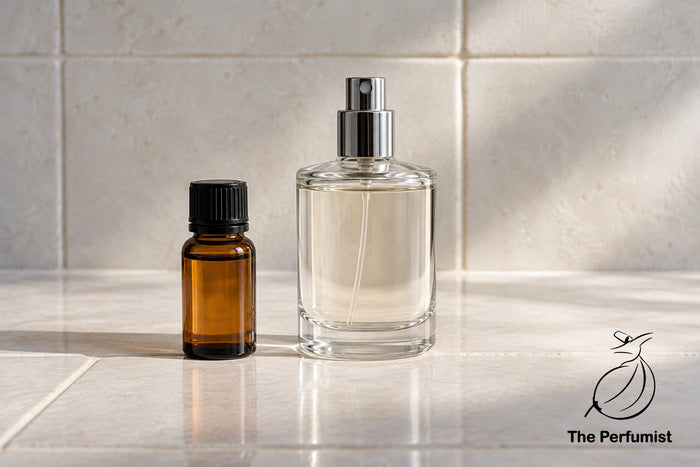
Does Oud Expire? What I Tell Collectors About Old Oud Oil
Does Oud Expire? The Simple Answer
I would not assign pure oud oil a universal expiry period. An older oil needs to be considered as a particular product, with its own identity, condition and handling history. Age alone does not establish quality or safety, and a pleasant aroma is not a reason to disregard the maker’s guidance. FDA guidance relevant to Does Oud Expire? explains that cosmetic shelf life depends on the product, its use and storage.
The word oud can describe distilled agarwood oil, a blended attar, an alcohol-based perfume, wood chips or bakhoor. These are different products. A storage rule or shelf-life claim for one should not automatically be applied to the others.
When assessing an older bottle, I would first ask what has changed. A darker colour, a quieter opening and a leaking closure are different observations. Separating them gives us a more useful starting point than declaring everything old either ruined or improved. The agarwood-oil research linked here for Does Oud Expire? examines controlled aging and thermal treatment; it does not supply a universal expiry date for a bottle at home.

First, What Do You Mean by Oud?
For pure distilled oud oil, I look for a clear description from the maker rather than relying on a large oud label. The starting material, product identity and known history help establish what we are assessing. An unknown bottle cannot be given a reliable lifespan from appearance alone.

A blended oud attar or perfume oil must be assessed as a composition. Its carrier and other aromatic materials matter alongside any oud it contains. Ask the supplier whether the bottle is pure oil or a blend, and keep that answer with the product details for future reference.
An alcohol-based oud perfume needs to be judged as a finished perfume. The name may describe its scent character rather than a bottle of distilled agarwood oil. Its formulation, packaging and manufacturer's instructions are the relevant starting points for storage and use.

Wood chips require a different inspection again. They are a solid aromatic material, and the questions concern their dryness, cleanliness and exposure to moisture. A perfume's loss of brightness and a damp container of wood should never be treated as the same problem.
Bakhoor adds another distinction because the preparation can include added fragrant materials. Its aroma can weaken or change as those materials age. I keep the maker's description and care instructions with it, rather than assuming that every preparation behaves like plain agarwood.

Before comparing two products, put their descriptions side by side. A distilled oil and a spray can share a woody character while carrying different care instructions. That distinction is especially useful when advice about one bottle is being repeated as a rule for all oud.
Why Old Oud Oil May Smell Different
Aged oud oil may smell different from the same oil when it was younger. That observation is worth recording without immediately calling it an improvement. I ask whether the change makes the scent more enjoyable and coherent, while keeping the separate question of condition in view.
Research on agarwood oil has compared thermal treatment with traditional aging and measured changes in scent character. The paper concerns a controlled experiment; it does not establish a household expiry date or prove that every bottle improves with time.
I would not turn that experiment into advice to heat a treasured bottle. A laboratory treatment and years in a home cupboard are different conditions. The practical lesson is narrower: an oil's aroma can change, and a claim about that change needs its context.
The Perfumist's Emperor of China listing describes a long-aged Hainan oud oil. For readers exploring Does Oud Expire?, it offers our own product context. A particular oil's stated history should still be kept separate from a promise about the lifetime of every oud product.
What Really Changes Inside Oud Oil
Air, light and heat can alter natural aromatic materials. I therefore treat storage history as part of the assessment, not an afterthought. A bottle kept closed in a dark cupboard has a different history from one repeatedly left open on a sunny windowsill.

The closure deserves close attention. A loose cap, a damaged stopper or residue around the neck can help explain a change in a bottle's condition. Before judging the aroma, I inspect the packaging and note whether the container still closes as intended.


A spray pump and a screw cap give me different things to inspect. With a screw cap, I look at how the cap meets the bottle neck and whether it seats normally. Visible threads describe the closure design; they do not tell me how old the contents are or whether the bottle has remained sealed throughout its history.

A nearly empty bottle is also a reason to review handling. I avoid repeatedly opening it just to check whether it has changed. If the original container no longer works properly, I ask the supplier about a suitable replacement rather than decanting into an arbitrary decorative vessel.

Keep observations specific. Write down leakage, a new smell at the closure, visible particles or a marked loss of aroma as separate findings. A useful record describes what happened; a note saying only that the oud has gone bad leaves too much unexplained.


Heat, Cold and Sunlight: How I Store Oud
My ordinary storage choice is a cool, dark place with reasonably stable temperatures. A closed cupboard away from direct sunlight is more useful than an elaborate display beside a window. The point is to reduce unnecessary exposure while keeping the bottle easy to handle cleanly.


I assess the storage position at different times of day. A window ledge can receive direct light when the curtains are open, while a nearby radiator creates a separate question about heat. A dark container or outer box cannot tell me what temperatures the bottle experienced in that location.


I move closed bottles to a secure place before cleaning their shelf, then return them once the surface is dry. Cleaning the storage area is separate from cleaning the product itself: I do not let a cloth, spray or rinse water become part of the bottle’s contents.

Keep the bottle away from radiators and other sources of sustained heat. A shelf can look shaded while still sitting beside a hot appliance. I consider where the bottle spends most of its time, rather than judging storage only at the moment I open it.

A hot vehicle is a poor place to leave fragrance. When travelling, I plan where the bottle will go once I arrive instead of leaving it in a bag in the car. The same care applies to a finished perfume as to a small oil vial.


Inside a travel organiser, I give a fragrance bottle a defined place so I can find and inspect it without emptying every compartment. The organiser helps with packing and keeping items apart; its appearance tells me nothing about insulation or protection from leaks. I still check the bottle itself after the journey.

An outer pouch or cushioning can help protect a glass bottle from knocks during transport. That is a different job from preserving the fragrance inside it. On arrival, I check the closure and follow the storage instructions; protective wrapping is not a reason to leave the bottle somewhere hot.

Bathroom humidity is another avoidable exposure, particularly for wood and bakhoor. I prefer a dry storage area where containers can be handled without wet surfaces nearby. An attractive bathroom shelf does not outweigh the value of consistent, clean storage.


The bottle should be tightly closed between uses. I check that the cap sits correctly and that the neck is clean enough to close properly. Tight closure means using the container as intended, without forcing a damaged part or ignoring a persistent leak.


Cold conditions are not a reason to improvise a heating routine. If a product has specific temperature instructions, follow them. Otherwise, stable home storage is a better aim than repeatedly moving the bottle between extremes in an attempt to manage its age.
When an Oud Product Really Can Go Bad
Contamination is different from maturation. Water, dirt or another product entering the container gives us a new problem to assess. I keep the working surface and applicator clean and avoid returning material that has already been used to the original bottle.


When moving from handwashing to handling a bottle, I finish drying my hands before touching its cap or applicator. The useful distinction is between cleaning my hands and introducing moisture to the product. Neither a washing step nor a drying method establishes the condition of an older fragrance.


A dropper adds a separate handling surface: the tip that moves between the bottle and the dispensing point. I note whether it has touched another surface rather than assuming that a tidy-looking bottle tells the whole story. That handling history belongs beside the purchase and storage details when I ask the maker about a questionable oil.

Follow the maker’s intended applicator method for normal use. A suspect bottle needs product-specific advice, rather than a skin application to investigate its condition.

Do not add water, fresh perfume or another oil to rescue a questionable bottle. Mixing changes what you are assessing and can hide the original warning signs. Keep the suspect product separate and ask its maker for advice about the particular change.

A newly unfamiliar smell or a major loss of aroma deserves attention, as do leakage or visible contamination. I record the change rather than diagnosing its cause from the scent alone. Irritation is a separate reason to stop using a product; it does not, by itself, establish that the product has expired.
Smell and appearance cannot establish that a cosmetic is safe. FDA guidance explains that shelf life depends on the product, its use and storage. If irritation develops, stop using it; do not keep applying it merely to finish an aroma comparison.
How I Examine an Old Bottle
First, gather the label, purchase details and any instructions supplied with the product. Distinguish the date of purchase from a documented production date. A bottle bought five years ago may have been made earlier; an attractive old container does not establish the age of its contents.


Next, check the outside of the container before opening it. Look for leakage and damage, and note any residue around the closure. This gives the packaging its own inspection rather than letting an impression from the bottle mouth stand in for the whole assessment.

Look at the contents without trying to diagnose them from colour alone. If particles, cloudiness or an unfamiliar change appear, record them and ask the maker what is expected for that product. The useful comparison is with this bottle’s documented earlier condition, not with the colour of a different oil.


If there is mold, suspected contamination or unexplained damage, stop the assessment and consult the supplier. There is no need to put the product on skin to prove that a concern is real. Keep enough identifying information to explain the issue clearly.
For a bottle with no such concern, a clean blotter can help separate the scent from residue on the packaging. I use a small amount and give it time, rather than deciding from a single hurried sniff at the neck of the bottle.

Record the opening and the later drydown separately. Keep used test strips apart from fresh ones so the next sample starts on clean paper. A familiar resinous depth can be less obvious at the first moment than it becomes later. Describe what you notice in ordinary words, and avoid turning a preference for one stage into a claim about chemical stability.


Compare with an earlier sample or written description only when its identity is dependable. A different batch, a different concentration or another person's memory can create a misleading comparison. Keep the bottle, the reference and the conditions clear in your notes.

A Practical Oud Shelf-Life Comparison
For pure oud oil, I would not substitute a general lifespan for information about the actual product. Its known identity, closure, handling and changes over time matter. A maker’s detailed guidance is more useful than a number copied from an unrelated perfume.

For an oud attar or finished perfume, keep the complete formula in view and follow its label. The presence of a woody material does not make every other component equally durable. Do not ignore the manufacturer's expiry or period-after-opening guidance because the scent is called oud.

For agarwood chips and bakhoor, I keep the maker’s storage instructions with the container and check for unexpected dampness or visible contamination. I would not infer the remaining life of a perfumed preparation from the age of the wood alone. Added aromatic materials and the condition of the packaging also belong in that assessment.

| Material | What to consider | Practical response |
|---|---|---|
| Pure oud oil | Identity, closure, handling and changes over time | Consult product-specific guidance; do not assume a universal lifespan. |
| Blended attar | The complete composition, including its carrier | Follow the label and investigate unexpected changes. |
| Oud perfume | Finished formulation, packaging and storage | Respect the maker's expiry or opening guidance. |
| Agarwood chips | Dryness, moisture exposure and cleanliness | Protect from dampness; investigate mold or contamination. |
| Bakhoor | Added aromatic materials, dryness and packaging | Watch for changed aroma, dampness or mold. |
Keeping Useful Notes on a Collection
A short bottle record can save a great deal of guessing later. I keep the product name, supplier, purchase date and any known batch details together. If a date is unknown, I leave it unknown rather than turning a family story or an estimate into a fact.

Record the opening date separately where it is known. Follow any period-after-opening instructions on the product, and keep a photograph of the label if it is likely to wear. This preserves the maker's guidance without inventing a new expiry rule of our own.

A simple photograph of the closed bottle and its contents can provide a useful comparison later. Use similar lighting when comparing colour, because a warm lamp and daylight can make the same oil look different. Treat the photograph as a record, not a safety test.
Write a few clear scent observations after a considered evaluation. Descriptions such as woody, smoky, sweet or unexpectedly sour are easier to revisit than a score with no explanation. Keep personal enjoyment separate from observations about leakage, contamination or packaging damage.


When contacting the maker, provide those details together: product identity, handling history, what changed and when you noticed it. Specific information gives them a better basis for advice than asking whether all old oud expires. Preserve their answer with the bottle record.
Questions Collectors Ask Me
Can oud oil last for decades? Some sellers describe oils with long aging histories, including the product discussed above. That is not a guaranteed lifespan for another bottle. I would want the identity, documented history and maker’s guidance before making a judgement about a particular old oil.
Is darker oud oil expired? Colour alone does not answer that question. Compare it with its own earlier condition if possible, and consider the other findings. A new colour change accompanied by leakage or an unfamiliar smell requires a different response from colour variation by itself.
Does a weaker opening mean the oil is ruined? It is an observation to investigate, not a complete diagnosis. Consider the later scent, the packaging and the storage history. Avoid promising that a quieter opening must be desirable maturation or that it must mean spoilage.
Should I refrigerate it? Start with the maker's instructions rather than assuming colder is always better. For ordinary storage, choose a cool, dark place and stable temperatures. I would not introduce a refrigerator routine without a product-specific reason.
Can I wear it if it still smells pleasant? A pleasant smell alone is not proof of safety. Respect the label and any signs of deterioration or irritation. Where the identity or condition is uncertain, ask the supplier instead of treating a skin application as the next diagnostic step.

My Conclusion on Old Oud
The useful answer depends on the product. I would not assign every pure oud oil the same expiry date, or treat a long aging history as a promise of indefinite life. Follow the maker’s guidance and investigate unexpected changes. Where the evidence about a bottle is incomplete, keep that uncertainty clear.
-Ali Attar