Visit our Library and download Free exclusive e-books — click to discover and begin reading.
Why Is Oud Expensive?
Why is Oud Expensive: Why the material costs more
Natural oud oil can be expensive because its aromatic raw material is variable, suitable wood must be selected and prepared, and extracting and evaluating a usable batch takes resources. But an expensive oud perfume is a different product: its price also includes formulation, packaging, distribution and the brand’s positioning. I separate those two questions before comparing prices. I use Kew’s account of agarwood as botanical background when considering why is oud expensive.
This cross-section makes uneven distribution easier to understand. The whole piece is not necessarily equivalent aromatic material. Selection and preparation can separate useful portions from less suitable wood, so the weight of a log is not a direct measure of the amount or value of oil it will produce.

The material sold as agarwood is not an ordinary piece of timber with a luxury name attached. Its resinous character is central to its aromatic use. Wood with different resin distribution and scent can command different prices; a close-up image alone does not establish a grade or justify a particular price.


The botanical source matters, but planting an Aquilaria tree is not the same as obtaining a particular grade of agarwood. Growth, resin formation, harvest decisions and the eventual scent all belong to the supply story. I am cautious when a seller compresses those variables into one dramatic claim about rarity. Kew’s guide provides the botanical background to why is oud expensive, including Aquilaria and Gyrinops.

Sorting is one reason a raw-material price cannot be understood from weight alone. Pieces may be separated for different uses and judged for their aromatic character. I ask what has been selected and why, because a carefully described lot is easier to assess than a photograph paired with a claim of exceptional rarity.

A tray of separate samples helps explain why one quoted “oud price” is often unhelpful. A supplier may be offering different lots, selections or intended uses. I ask which exact material the price refers to before treating a cheap offer and an expensive one as substitutes.

Preparation and extraction take resources
Handling and preparation are part of the process even when they are less visible than the bottle. Wood has to be managed between selection and extraction, and each producer’s method needs to be understood on its own terms. When someone charges for exceptional effort, I want an explanation of the work rather than a dramatic production story.

Some agarwood preparation methods include soaking before distillation, but there is no single universal schedule that establishes quality. Processing choices can affect the result and occupy equipment and labour. I would rather hear a producer’s specific method than accept a fixed number of days as a quality guarantee.

Preparation tools can be simple while the judgement behind their use is demanding. A mortar is shown here as a general laboratory tool, not as proof that this is how every oud producer processes wood. Small-scale equipment alone tells me little about efficiency, quality or a fair selling price.

Extraction separates an aromatic product from its raw material; it does not turn the full weight of the wood into bottled oil. The useful cost question is how much saleable material a particular batch produces. Generic glassware illustrates the principle but cannot establish the yield of an oud batch.

Yield depends on the material and the extraction conditions. That is why I avoid repeating a universal “one tonne makes one bottle” story. A published experiment describes its own inputs and method; it is not a conversion rule for every producer or every grade of agarwood.

Equipment, energy and operation all contribute to production expense, but their share varies. This museum display gives historical context to distillation rather than showing oud being made. Copper equipment is not automatically evidence of an artisanal premium, and a modern setup is not automatically inferior.

Recovering and handling the aromatic fraction is another stage between wood and bottle. The illustration makes separation visible without claiming a specific oil or yield. When a producer explains their cost, I look for a coherent account of raw material, processing and the amount they actually recovered.

Expensive materials make accurate measurement more valuable. Marked laboratory glassware illustrates why a recorded quantity is more useful than a vague description such as a generous drop. This is a general measurement reference, not proof that the pictured equipment was used to make a particular oud oil.

Testing and quality-control work can require specialised instruments, maintenance and trained people. Those are real business costs, but a photograph of equipment is not a test result. For a high-priced oud purchase, I would ask for the relevant evidence and read what it establishes rather than treating laboratory imagery as a guarantee.

Analytical testing brings an equipment and interpretation cost. A chromatographic result can help describe an oil composition, but I would not treat a machine photograph or a report alone as a complete verdict on origin, sustainable sourcing or fragrance quality. The pictured instrument is a laboratory reference, not our facility.

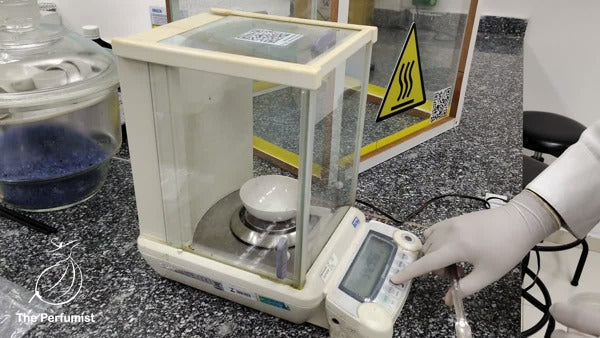
Careful weighing makes expensive ingredients easier to account for. I want the vessel weight excluded and the batch quantities recorded, rather than a formula remembered by eye. The scale in this perfumery reference illustrates measurement work, not a documented oud yield or a laboratory-grade accuracy claim.

Preparation includes suitable vessels, cleaning and careful transfers between stages. Those practical costs are spread across the amount of usable oil or finished fragrance obtained, so a small batch cannot always share the same unit costs as a larger run. Empty laboratory glassware illustrates that preparation, not a specific production claim.

An instrument reading is only useful when I know what was measured and how. Refractive-index checks can be part of a material specification, but no single number proves oud origin or scent quality. Proper testing adds work and equipment costs; I would still ask for a report that belongs to the actual batch.

Evaluation is part of the work
Production is only part of the value discussion. Someone still has to evaluate whether the aromatic material fits its intended use. I look for a clear reason to choose it: perhaps a particular texture, a useful drydown or a balance that suits the intended blend. Evaluation is skilled work, although it cannot turn a price into proof of quality.

An attractive oud material can be valued for its character rather than for being the loudest sample. I compare the opening, the changes over time and the settled scent. A forceful smell may be useful in one composition and unsuitable in another; intensity alone does not settle the price question.

Blind comparison can separate enjoyment from the prestige of a price tag. I first record what I actually smell, then look at the description and cost. That does not establish authenticity, but it helps stop an expensive label from deciding my preference before the fragrance has developed.

Small retained samples can help a producer compare one batch with another. Documentation makes that comparison more useful by keeping the identity and handling history attached to the liquid. The sample photograph illustrates traceability in practice; it is not a laboratory certificate for an oud product.

Evaluation takes skilled time as well as material. I would want to know how a costly oud sample develops, whether its character remains coherent, and whether a later purchase is comparable to the tested batch. The pictured evaluation is a general perfumery scene, not proof of any particular oud origin.

A well-organised sample library helps a perfumer compare materials without relying entirely on memory. Maintaining reference samples and records is part of development work, though the existence of a laboratory alone does not justify any particular price. I still judge the fragrance and the evidence offered with it.

Close inspection is useful when buying a piece of aromatic wood, but appearance is only part of the assessment. A lens can reveal surface detail; it cannot authenticate a species, origin or scent quality on its own. I would treat an impressive photograph as a starting point for questions, not a reason to accept a premium price.

Clear material labels help prevent expensive mistakes during formulation. A perfumer needs to know which material and batch is being used, especially when small quantities carry high costs. This general preparation scene illustrates recordkeeping and selection, not the identity or origin of any oud oil.

Before a material reaches a sample vial, someone must prepare the equipment and keep it organised. Clean vessels and careful changeovers help avoid carrying one fragrance into another. That handling is part of small-batch work; this general laboratory photograph illustrates the preparation, not a particular oud producer.

A clear description matters more than a story
An origin story can add interest, but the price deserves more than a story. I look for a clear product identity and meaningful sourcing information where natural agarwood is claimed. A notebook and sample are reminders to keep records, not substitutes for the records themselves. Our discussion of origin adds context to why is oud expensive without treating a country name as a quality guarantee.

Historically important pieces show that agarwood has been treasured beyond modern perfume retail. Their cultural or collecting value is not a useful benchmark for the cost of an everyday fragrance. I do not use an exceptional object to imply that every bottle bearing the word oud should command an exceptional price.

A label earns its place by telling me what I am buying: the amount, the type of product and a batch reference where available. Words such as premium or rare are less useful without those details. Before paying more, I ask the seller to turn the attractive label into specific information.

A handwritten name on an attractive bottle is not a complete account of what it contains. Before paying for oud, I want the seller to distinguish a natural oil from a blend or a reconstructed note. The label should lead to a clear description rather than replace one.

Agarwood also has a history as a valued carving material. This1741 museum object belongs to that cultural and collecting context: artistry, age and history can shape the value of an object. I would keep that separate from the price and scent quality of a modern distilled oil.

A perfumer can construct an oud accord from several aroma ingredients, whereas natural oud oil is a particular extracted material. These are different products with different cost structures. I want that distinction stated clearly before comparing their prices; the pictured labelled aroma ingredient illustrates formulation, not oud oil.

Compare the amount and the finished purchase
A producer also has to preserve and manage material after production. Sealed, identified samples kept away from direct light help maintain a consistent reference. Storage is part of responsible handling, but a photograph of an old cupboard does not prove that an oil has been aged or improved.

The size of the batch and the way it is divided into sale units influence the offer a buyer sees. A small bottle may make an expensive material accessible, yet its price per millilitre can differ from a larger quantity. Compare the same product and declared amount before drawing a conclusion.

Volume, concentration and composition are separate pieces of information. Ten millilitres of diluted perfume oil is not directly comparable with ten millilitres of a declared undiluted aromatic material. For me, a useful answer to “why is oud expensive” ends with identifying the actual product, then deciding whether its documented qualities and the experience it offers justify the price.

Packaging and careful handling contribute to the cost of a finished purchase. Protective material can serve a practical purpose when a small glass bottle is shipped. I separate that expense from the aromatic value of the oil, so an elaborate presentation does not become my measure of material quality.

The amount paid at checkout may include delivery and other clearly stated charges as well as the fragrance itself. When I compare two offers, I compare the same quantity and the total delivered price. That keeps a cheaper-looking bottle from winning a comparison simply because part of its cost appears later.

I compare prices on the same basis before judging value: the stated quantity, whether the product is pure oil or a finished blend, and what is actually documented about it. A small bottle is not necessarily cheaper per unit. Calculation helps separate a large ticket price from a genuinely higher material cost.

Checking an order against its record is a small but practical part of fulfilment. A buyer needs the promised quantity and the correct product, particularly when two similarly packaged samples have very different prices. I value accurate handling, while keeping it separate from a claim that the aromatic material is rare.

A small quantity can still represent a substantial purchase. I compare the declared amount in millilitres or grams rather than an informal promise of so many drops, because drop size changes with the liquid and dispenser. The photograph illustrates dispensing, not verified oud content.

A smaller sample can reduce the amount I commit before deciding whether I enjoy an expensive fragrance. I compare its total price and declared quantity with the larger format, rather than assuming both offer the same value per millilitre. These unbranded containers illustrate purchase formats; their appearance does not identify the contents.

A written invoice should match the material and quantity being purchased. I would ask for the oil or blend description, batch reference and amount in writing, because a vague verbal assurance becomes difficult to check after delivery. The pictured blank invoice is a paperwork reference, not evidence for a supplier.

Holding valuable aromatic material in stock also means paying attention to its surroundings. A room gauge makes changes in temperature and humidity visible, rather than leaving storage conditions to guesswork. I would ask how an expensive batch has been kept; the pictured reading is an example of monitoring, not a recommended storage target.

My final test is whether the described material, the fragrance I actually smell and the asking price make sense together. A high price deserves clear information and a sample I enjoy; the prestige of oud alone does not make the decision for me.
-Ali Attar