Visit our Library and download Free exclusive e-books — click to discover and begin reading.
What Is Bakhoor?
What Is Bakhoor? A Perfumer’s Guide
What is bakhoor? A traditional mabkhara releases a gentle ribbon of fragrant incense smoke.

Bakhoor is not one precious wood, one fixed recipe, or another name for oud. A clear answer to what is bakhoor begins with prepared incense made to release fragrance through heat. Depending on the maker, it may begin with wood chips, wood powder, resins, perfume oils, essential oils, binders, or a mixture of natural and synthetic fragrance materials. The emissions research linked under what is bakhoor provides context for discussing the smoke produced during use.
That distinction matters. I have seen people judge bakhoor by the darkness of a chip, the strength of the first smoke, or the word “oud” on a box. None of those things proves what is inside. To understand bakhoor properly, I look at the base, the perfume composition, the way it behaves under controlled heat, and the scent it leaves after the burner has cooled. WHO’s air-pollution guidance is also relevant to what is bakhoor: fragrance enjoyment should not be confused with a claim that combustion is harmless.
Bakhoor’s Forms And Everyday Uses
Bakhoor is a combustible incense preparation used to perfume rooms, clothing, and sometimes hair. It is especially important in Gulf hospitality and domestic fragrance culture, where scent is not treated only as a personal accessory. It can welcome a guest, mark the atmosphere of a home, or leave a warm trail on fabric before an occasion.
Commercial bakhoor appears in many forms: scented chips, loose granules, powder, balls, bricks, and tablets. The format tells you how the material has been prepared, but it does not tell you the quality. A beautiful chip may be lightly scented. A plain pressed tablet may be very well composed. The name of the shape is never a substitute for smelling the material.
What Bakhoor Can Be Made From
There is no universal bakhoor formula. Makers build it around the materials, performance, price, and scent character they want. The base and added fragrance need to be considered together.
Some bakhoor is made by perfuming visible wood chips. Some uses finely ground material formed with a binder and dried. Some combines several textures in one batch. Even two products made by the same house can behave differently because the proportion of wood, perfume, resin, and binder changes the way heat reaches the aromatic materials.
I do not treat synthetic material as automatic evidence of poor quality, and I do not treat the word natural as automatic evidence of purity or safety. A transparent, balanced composition can be more satisfying than an expensive product hidden behind romantic claims.
Bakhoor Is Not The Same As Oud
Pure oud chips are pieces of resinous agarwood. Bakhoor is a prepared incense blend that may contain oud. The two can meet in the same burner, but they are not interchangeable.
A high-grade agarwood chip can be heated on its own. Its aroma comes from the resin within the wood. In bakhoor, the smell may come from the wood base, added oils, resins, a constructed oud accord, or all of them together. Some affordable bakhoor contains little or no meaningful amount of genuine agarwood. Spent agarwood powder left after distillation may also be reused as a base in lower-cost incense.
This does not make every affordable bakhoor dishonest. It becomes a problem when a prepared blend is presented as rare raw oud, or when a dark color is used to imply a quality the material cannot support. I would rather know what I am heating than pay for a story.
How Bakhoor Is Prepared
The exact manufacturing method varies, but the principle is simple: an absorbent aromatic base is combined with a fragrance composition, allowed to take up that fragrance, shaped when necessary, and then rested or dried until it can be handled and heated.
Chip-style Bakhoor
Wood pieces are selected for size and porosity, then perfumed. The added composition may sit mainly on the surface or penetrate more deeply depending on the wood, formula, and resting time. Good chip-style bakhoor should not feel as if wet perfume has simply been poured over decoration.
Powdered Or Formed Bakhoor
Wood or aromatic powder can be mixed with oils, resins, fragrance materials, and a binder. The mixture may be shaped into small pieces, balls, bricks, or tablets and dried. This format can produce a steady, uniform release, although excessive binder or oil may make it smell heavy or burn unevenly.
Why Batches Differ
What is bakhoor? Tongs place a small scented wood chip safely onto controlled heat.

Wood absorbs differently. Perfume materials evaporate at different speeds. Resins soften under heat, while dry powders may scorch quickly. Small changes in proportion, drying, storage, and burner temperature can make one batch open clearly and another feel blunt.
What Heat Does To Bakhoor
Bakhoor is designed for heat, but more heat is not automatically better. At the beginning, the most volatile perfume notes often rise first. As the material warms, woods, resins, spices, and heavier accords become more noticeable. The final impression is the dry, warm trace that remains in the room and on fabric.
When heat is excessive, this development collapses. Instead of moving from one phase to another, the composition can jump directly to burnt, acrid, chemical, or plasticky smoke. That may be a material problem, a burner problem, or simply too much bakhoor placed on very hot charcoal.
For an unfamiliar product, I start with a small piece and moderate heat. I want to hear the composition speak before smoke begins shouting over it.
How I Evaluate Bakhoor Quality
Before Heating
I smell the unheated material and examine its surface. I look for a coherent fragrance rather than one aggressive sweet note. Heavy oiliness, a sour smell, or an artificial color that transfers easily makes me cautious, although appearance alone cannot prove quality.
At First Contact With Heat
I watch how quickly the fragrance opens and whether the first impression is aromatic or merely smoky. A little smoke is normal, particularly with charcoal, but an immediate harsh cloud often means the temperature or dose is too high.
Through The Middle
I listen for movement. A floral opening can become warm wood; a sweet amber effect can become resinous and dry. The changes should feel connected. Sudden scorched bitterness is not complexity.
After The Burner
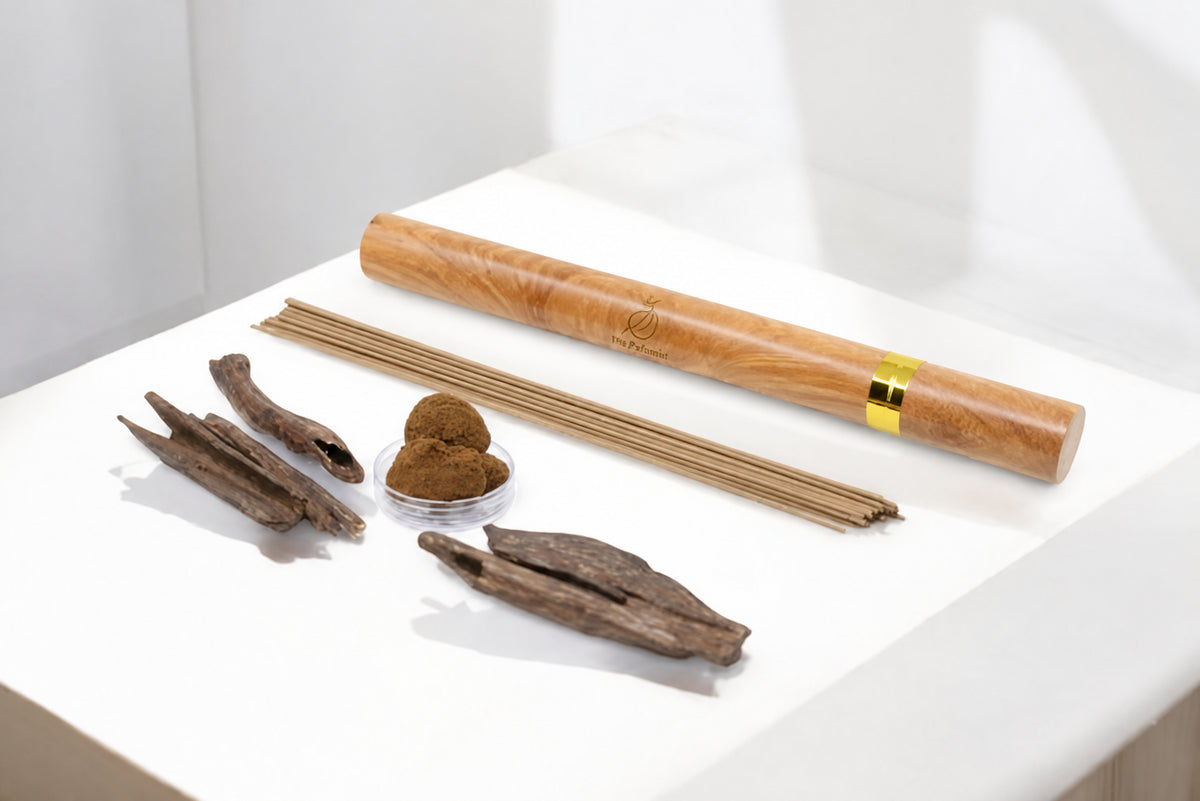
What is bakhoor? Raw oud wood and a prepared bakhoor block show the difference.

The room afterward is often the clearest test. I leave, return, and smell the air and nearby fabric. A good bakhoor leaves a balanced trace rather than a stale wall of perfume. Projection during burning is only half the performance.
In The Description
Clear labeling matters. I value a maker who distinguishes prepared bakhoor from pure agarwood and does not promise rare oud, natural musk, or ambergris without evidence. Strength, darkness, and luxury language are not laboratory tests.
How To Use Bakhoor With Control
Place the burner on a stable, heat-resistant surface. Keep it away from curtains, paper, unstable furniture, children, and pets. Begin with a very small amount. With charcoal, allow the coal to establish and use tongs rather than your fingers. With an adjustable electric burner, begin at a moderate setting and increase only if the material needs more heat.
Do not lean directly over the smoke or leave the burner unattended. Ventilate the room and avoid sustained exposure, especially around children, pregnant people, people with asthma or other respiratory sensitivities, and pets. Research on incense emissions explains that charcoal and direct combustion produce smoke and fine particles. Natural incense smoke should not be described as harmless, medicinal, or an air purifier.
Allow the burner to cool completely before moving or cleaning it. If you scent clothing or hair in the traditional way, keep fabric and hair well above the heat source and never allow them to touch a flame, hot coal, or heating element.
How To Store Bakhoor
Keep it in a clean, tightly closed container away from direct sunlight, unnecessary heat, and moisture. Strong blends can perfume softer ones, so I store different compositions separately. Dampness can encourage deterioration, while an open container allows volatile perfume materials to fade.
Bakhoor can change over time as its added perfume oils age. A newly sour, rancid, or unusually harsh smell, visible mold, or major loss of aroma deserves attention. Darkening by itself is not proof that a product has improved or spoiled.
Common Buying Mistakes
The useful questions are simpler: What is the base? Is this raw agarwood or a prepared blend? How does it change under moderate heat? What remains after the smoke clears? Is the seller honest about what the product is?
My Final Answer
So, what is bakhoor? It is a prepared incense composition made to release fragrance through heat. It may contain wood chips, aromatic powders, resins, oils, perfume materials, binders, genuine oud, an oud accord, or no oud at all. The oud product linked through what is bakhoor provides a genuine material reference for comparison.
Its quality does not live in one ingredient name. It lives in the relationship between the base, the fragrance, the heat, and the final trace in the room. Start small, heat it with control, ventilate the space, and judge the full experience—not only the first cloud of smoke.
Frequently Asked Questions
Is Bakhoor Always Made From Oud?
What is bakhoor? An electric incense heater provides steady heat without direct charcoal.

No. Genuine agarwood may be included, but bakhoor can also be built on sandalwood, other woods, aromatic powders, resins, and fragrance materials.
Is Bakhoor The Same As Incense?
Bakhoor belongs to the broad incense family. Unlike a typical self-burning stick, it is usually placed in a separate charcoal or electric burner.
Can Bakhoor Be Used On Clothing?
Its smoke is traditionally used to scent fabric, but clothing must remain safely above the heat source. Never let fabric touch hot charcoal, flame, or the heating element.
How Much Should I Use?
Begin with one small piece. Room size, ventilation, formula strength, and burner temperature all change the result.
Does Stronger Bakhoor Mean Better Bakhoor?
No. Strength can be impressive, but balance, development, material honesty, and the room’s dry-down are better quality indicators.
A Deeper Perfumer’s Answer
What Is Bakhoor Made From?
What is bakhoor? A sealed glass jar protects scented chips from heat and moisture.

I begin with the base. Bakhoor may use wood chips, oud dust, sandalwood, exhausted agarwood powder, resin, perfume oil, essential oil, or a binder. The National’s factory report linked through what is bakhoor shows one real production method, but it is not a universal formula. A responsible description separates what is documented from what is merely suggested by the smell.
What Is Bakhoor Compared With Pure Oud?
Pure oud chips are resinous agarwood. Bakhoor is a prepared incense that may contain oud, an oud accord, another fragrant wood, or no meaningful agarwood at all. I never use the words as synonyms. The oud claim must be supported by the actual formula, while the bakhoor name describes the finished incense preparation and the way it is intended to be heated.
How Much Oud Can Bakhoor Contain?
There is no standard percentage. Some bakhoor is built around genuine agarwood chips or oud dust; some uses a modest amount of oud beside resin and perfume oil; some creates an oud impression with other woods and fragrance materials. Price, darkness, and smoke do not reveal the percentage. If the amount matters, I ask the maker for a clear ingredient or production statement.
Why Bakhoor Can Look Like Chips, Powder, Or Tablets
The form usually follows the base and manufacturing method. Scented wood can remain as chips. Powdered wood and resin can be mixed with perfume oil and a binder, pressed, rolled, or cut, then dried. Granules and loose mixtures may combine materials without one solid shape. Form affects heating speed, yet it does not establish purity or quality by itself.
How Bakhoor Carries Perfume Oil
Wood and porous powders can hold perfume oil and release it gradually as temperature rises. The balance matters: too little oil may feel thin, while an overloaded surface can smell loud before turning scorched. I prefer bakhoor in which the perfume oil belongs to the wood and resin, so the opening, smoke, and dry-down feel connected rather than pasted together.
Why Resin Changes Bakhoor
Resin can bridge dry wood and sweetness. Benzoin-like warmth may feel ambered or vanilla-toned; frankincense-like effects may feel drier, brighter, or mineral. Resin also reacts strongly to heat. Controlled warmth can make it glow, while excessive charcoal can turn it sharp. I judge resinous bakhoor by clarity and movement, not by how thick the first cloud appears.
What Charcoal Does To Bakhoor
Charcoal provides fast, changing heat and adds combustion of its own. When it is too hot, smoke can erase floral detail, scorch perfume oil, and make ordinary bakhoor seem more powerful than it is. I let charcoal settle under a light ash before adding a small piece. That simple pause often reveals more wood, resin, and perfume than a dramatic immediate burn.
What An Electric Burner Reveals About Bakhoor
What is bakhoor? A perfumer blends aromatic wood, resins, oils, and powdered materials.

An electric burner can offer steadier heat and make comparison easier. Lower settings often separate perfume oil, wood, resin, and smoke into clearer stages. It is not automatically better than charcoal; it is a different lens. If bakhoor smells harsh on both controlled electric heat and carefully managed charcoal, the imbalance is more likely in the material itself.
How I Judge Bakhoor Quality
I assess the unheated aroma, the first release, the developed smoke, and the dry-down. Good bakhoor keeps shape through those stages. Strength is only one dimension. I also want proportion, recognizable materials, a clean transition, an intentional room trace, and honest disclosure. A beautiful box, a dark chip, or the word royal cannot substitute for that performance.
How I Store Bakhoor
I keep bakhoor closed, dry, shaded, and away from strong heat or rapid temperature changes. A clean glass jar or the maker’s well-sealed container helps preserve perfume oil and prevents the blend from absorbing household odors. I label the batch and date. Storage cannot improve a weak formula, but it can protect a balanced bakhoor from unnecessary evaporation and contamination.
How I Use Bakhoor With Restraint
I heat a small piece in a ventilated room and allow time before adding more. WHO guidance identifies incense burning as a potential indoor pollution source, and published studies have characterized pollutants in bakhoor smoke. Beautiful fragrance does not make combustion harmless. Children, pets, pregnant people, and anyone with asthma or respiratory sensitivity deserve particular care and distance from concentrated smoke.
What Is Bakhoor In One Honest Sentence?
Bakhoor is a prepared incense made from a fragrant base—often wood, powder, resin, perfume oil, essential oil, and sometimes oud—designed to release aroma through heat. Everything beyond that sentence depends on the maker’s formula, the material’s quality, the burner, and the room. That is why I describe the evidence first and the romance second.
How Bakhoor Behaves In A Traditional Mabkhara
A mabkhara is the traditional vessel, not a guarantee of good bakhoor. The incense kit linked through what is bakhoor provides a practical vessel reference. I place very little bakhoor on settled charcoal and watch how the incense develops. Wood chips warm first, perfume oil rises, resin softens, and smoke carries the formula. If oud is present, I want its agarwood character to remain readable. The mabkhara gives bakhoor ceremony, but careful heat gives bakhoor clarity.
How Bakhoor Behaves On A Modern Mabkhara
What is bakhoor? A cooled burner and extinguished charcoal demonstrate safe incense handling.

A modern mabkhara may use an electric burner instead of charcoal. This makes bakhoor easier to compare because the incense receives steadier heat. I can lower the electric burner, smell the perfume oil, then let wood chips and resin deepen gradually. Oud and agarwood details often stay clearer. The modern mabkhara does not make bakhoor better; it makes the heating decision more repeatable.
Why Bakhoor Incense Needs Airflow
Bakhoor is incense, and incense changes the air as well as the aroma. I open a window or create gentle cross-ventilation before heating bakhoor. This keeps smoke from becoming the only impression and helps oud, resin, wood chips, and perfume oil separate. Airflow also respects the fact that charcoal combustion and bakhoor smoke can add indoor pollutants. A refined bakhoor ritual should never depend on filling the room until it feels heavy.
How Bakhoor Differs From Loose Resin Incense
Loose resin incense may focus on frankincense, benzoin, myrrh, or another raw resin. Bakhoor can contain resin, but bakhoor is usually a more composed preparation that may add wood chips, oud, agarwood powder, perfume oil, and a binder. Both release smoke through heat. The difference is formulation: bakhoor often behaves like a complete perfume for the room, while single-resin incense reveals one material more directly.
How Bakhoor Differs From Incense Sticks
An incense stick usually combines aromatic powder with a combustible support so it can sustain its own ember. Bakhoor normally receives heat from charcoal or an electric burner. That distinction changes smoke, temperature, and control. Bakhoor may reveal oud, resin, perfume oil, and wood chips in stages, while a self-burning incense stick follows its own combustion rate. Neither name proves natural materials, safety, or quality.
My Bakhoor Vocabulary For Honest Buying
When I buy bakhoor, I separate base, perfume, heat, and evidence. The base may be wood chips, oud dust, agarwood powder, sandalwood, or resin. The perfume may use perfume oil, essential oil, or an accord. The heat may come from charcoal, a mabkhara, or an electric burner. The evidence should explain what the bakhoor contains. This vocabulary keeps incense appreciation precise without removing its beauty.
A Bakhoor Checklist Before The First Burn
Before I heat bakhoor, I note the bakhoor form, base, declared oud content, perfume oil, resin, and batch information. I smell the bakhoor cold, prepare a clean mabkhara, control the charcoal or electric burner, and open the room. During the burn I follow bakhoor from first warmth to smoke and dry-down. Afterward I record whether the bakhoor stayed woody, resinous, balanced, and clear. This repeated bakhoor checklist is more useful than judging one dramatic cloud.
A Bakhoor Checklist After The Room Clears
When the room clears, I ask what the bakhoor left behind. Did the bakhoor dry-down feel intentional? Did oud, wood chips, resin, perfume oil, and incense smoke remain connected? Did the bakhoor become harsh only because the charcoal was too hot, or did the material stay rough under controlled heat? I also check whether the bakhoor container closes cleanly and whether the maker’s explanation still matches the experience. Good bakhoor survives calm evaluation.
A Visual Guide To Bakhoor Materials, Heat And Evaluation
These photographs show the materials, vessels, smoke patterns, storage choices and controlled tools that help explain bakhoor. Generic wood, resin, incense or laboratory equipment is used only as process context; none of these scenes proves a particular finished formula or a Perfumist production claim.
An incense stick and a piece of frankincense belong to the wider incense category, but neither is automatically bakhoor.

I use this comparison to separate a product's form from its composition. A prepared bakhoor needs its own description of the base and added fragrance; a photograph of one possible material cannot supply that missing formula.

A documented Aquilaria tree helps explain the botanical context of agarwood. A close photograph of ordinary wood answers a different question: what a surface looks like.

I keep those records separate. Neither a hole nor a dark patch in an unidentified piece of wood is enough for me to name it agarwood or estimate its value.

Whole sticks and loose shavings show how differently wood can be presented.

When examining a bakhoor offer, I ask whether the visible pieces are the finished perfumed product or merely an example of its proposed base. That distinction keeps a raw-material photograph from becoming an unsupported promise about what arrives in the container.

Wood grain can be attractive without identifying the material.

I would not choose bakhoor from a close-up of its pattern alone. The useful companion to a texture photograph is a clear product description: the declared base, whether fragrance has been added, and how the maker intends the finished preparation to be heated.

Bark and loose chips make the difference between surface and preparation easier to see.

A fragment's roughness does not explain its perfume composition. For a finished bakhoor, I want the description to identify the offered form and distinguish it from any background wood used to illustrate the article.

A pile of logs is a supply image, not a finished-incense specification.

Before connecting such a photograph to a bakhoor, I would ask which material it documents and how that record relates to the batch on sale. Large quantities and impressive stacks do not establish a rare ingredient or an unusually concentrated perfume.

Visible material on a tree can introduce a discussion of resins, but its appearance does not settle its identity or intended use.

I avoid treating every golden deposit as interchangeable with an incense ingredient. A maker's named material and its supporting record are more useful than a colour resemblance in a photograph.

A shaped wooden object illustrates an important buying mistake: confusing decoration with an aromatic preparation.

An attractive form does not tell me whether the wood is scented, suitable for heating, or part of a bakhoor formula. I read the intended-use description before giving the object any role in a fragrance ritual.

A close resin-like deposit and a wider wood view offer different levels of detail. The close view can show texture; the wider view can show the surrounding material.

Neither supplies the missing species or formula. I use a named source record to connect those observations before drawing conclusions about an incense ingredient.

The word wood is too broad to explain a bakhoor by itself.

When a seller names a base, I keep that name attached to the actual product record. A branch photographed elsewhere may illustrate the broad material category, but it cannot establish which wood was used in the preparation I am considering.

Golden colour is particularly easy to overinterpret.

A deposit on bark may resemble an amber-toned fragrance in colour without having any connection to that perfume description. I separate visual observations from smell language: the photograph shows a surface, while the finished bakhoor still needs a composition account and a controlled evaluation.

Loose fragments show why the offered form deserves a clear photograph.

A close view can help a buyer understand whether a container holds chips, powder or a mixture of visible textures. I would still ask the maker what those components are; recognizing a shape is not the same as identifying an ingredient.

Weathered grain is a visual record of a piece of wood, not a clock for finished incense.

I do not infer a bakhoor's production date from a rustic-looking background. A batch date, packing date or maker's explanation gives an age statement a meaning that an atmospheric photograph cannot provide.

Traceability needs a connection between records.

A photograph of wood and a separate photograph of a deposit on bark do not establish that the two belong to the same source or production batch. When origin matters to the purchase, I ask what documentation connects the named material to the actual offer.

Dark and light wood surfaces invite quick judgments, but colour alone is a weak basis for choosing bakhoor.

I record what is visible without translating it into purity or grade. A finished preparation should be assessed through its declared identity, intended use and fragrance experience, rather than a dramatic contrast in a photograph.

Raw-material handling and finished-product storage are different subjects.

A log pile outdoors does not tell me how a packaged bakhoor is kept. For the product I buy, I look at the container and the maker's storage directions, keeping those practical details separate from pictures used to explain a material's broader context.

Scale can disappear in a close photograph.

A small fragment may look like a substantial chip when there is no useful reference beside it. I prefer an offer that states the package quantity and shows the finished form clearly, so that the visual impression does not have to carry information it cannot reliably communicate.

A wider photograph can make a material easier to recognize as a pile or stack, while still leaving its identity unresolved.

I would not read ordinary timber as premium agarwood because it appears in an oud-related article. The name of the material should come from evidence, with the photograph supporting that record.

Collection photographs are valuable when their source identifies what is being collected.

They should not silently become proof of a bakhoor ingredient or a Perfumist production method. I keep the documented activity attached to its own description and ask separately which ingredients the finished incense maker actually declares.

Smoke is visible; the full fragrance experience is not.

A photograph can show a plume against a dark background, but it cannot tell a reader whether the bakhoor smells balanced, harsh or pleasant. I use smoke pictures to discuss heating context and keep my scent judgment tied to the actual material being evaluated.

A match and a burning incense stick show ignition and self-burning incense, not every method of using bakhoor.

I distinguish those formats before discussing a burner. The preparation's instructions should determine how it is used; a dramatic flame photograph is not a reason to apply the same method to a different product.

Smoke near a window is a scene, not a measurement of ventilation.

I do not treat a photograph as proof that a room has suitable airflow. For a bakhoor session, the useful practical details are the product's directions, the heating arrangement and the actual space, rather than how clearly the camera captures the plume.

A holder must be considered in relation to the incense it is intended to support.

A small stick holder and a vessel used with another heating arrangement are not automatically interchangeable. I look for the maker's intended use and a stable placement instead of assuming that any decorative bowl is a suitable bakhoor burner.

Lighting can make smoke appear blue, pale or unusually dense.

I would not translate those photographic effects into a fragrance note or a quality grade. The image is useful for showing that smoke is present; the character of a bakhoor still has to be described from the actual evaluation, not from the background colour.

An open flame and a smouldering incense preparation are visibly different situations.

I keep that distinction clear when discussing bakhoor so that a fire photograph is not mistaken for a recommended setting. The particular product and burner instructions belong at the centre of the explanation, with images supporting rather than replacing them.

Handheld incense photographs show an instant, not a complete handling method.

I do not use them as instructions for holding hot material during a bakhoor session. A practical explanation should identify the intended vessel and tools and make clear where the material is placed, instead of relying on the pose in a photograph.

Different hanging and tabletop vessels belong to different incense traditions and arrangements.

Their presence in an article does not identify the contents as bakhoor. I name only what the source establishes and keep the cultural or decorative context distinct from a claim about the formula being heated.

Several burning sticks can create a visually fuller scene than one.

That does not make the image a guide to how much bakhoor to use. I avoid converting the number of visible sticks into a dose recommendation; the product's form and directions need to be considered on their own terms.

A faint plume against a pale background can be harder to see than the same sort of subject against black.

Visibility in a picture is therefore not a useful comparison of fragrance strength. I would compare the actual products under a clear evaluation method instead of ranking them by how much smoke a camera reveals.

A bowl in a photograph may be a prop, a holder or part of a documented incense arrangement.

I do not assign it a heating function without that context. For a reader choosing bakhoor equipment, a clear description of the intended vessel is more useful than copying the shape of an unidentified object.

Black-and-white photography emphasizes smoke patterns while removing colour information.

It can explain the appearance of a plume, but it cannot establish ingredients or performance. I keep aesthetic observations separate from product claims so that an expressive photograph does not become an invented account of the bakhoor's composition.

A plume can emerge from a stick or from a vessel containing another preparation.

Those images help distinguish presentation, not authenticate the material inside. When discussing bakhoor, I state whether a photograph is a general incense reference rather than leaving the reader to assume it documents the exact product under review.

A time-based smoke photograph and a detailed vessel photograph emphasize different things: movement and construction.

Neither records the whole fragrance session. I use them to explain those visible subjects and reserve judgments about development or lasting room scent for observations made with the actual bakhoor and its stated heating method.

An ornate incense holder can draw attention away from the material it supports.

Decoration may be part of the appeal, but it does not identify an ingredient or grade. I separate appreciation of the vessel from assessment of the preparation, especially when a photograph is being used to illustrate a broad incense category.

Incense cones and loose bakhoor should not be treated as the same format merely because both may produce smoke.

A cone photograph is useful as a comparison within the incense family. I would still describe the particular bakhoor's form and intended heating method separately, so that the comparison does not become a usage instruction.

The finish of a censer can communicate style, but it cannot prove the quality of the fragrance inside it.

When I read a bakhoor offer, I separate the container's appearance from the material description and package quantity. That makes it easier to understand what the price actually includes.

Balances introduce the idea of recorded quantities.

These photographs are equipment references, not evidence that a particular bakhoor maker used either instrument. If a formula or batch record is supplied, I look for the quantities and units attached to that record rather than assuming that a laboratory-looking image proves precise production.

A condenser and a mortar have different roles in material work.

Seeing them together should not imply that every bakhoor is distilled or prepared by one fixed process. I ask the maker to describe the actual preparation and use equipment photographs only where they help explain a step that is supported by that account.

A mortar and a balance can illustrate preparation and measurement as separate activities.

The useful explanation is specific about what is being worked on or weighed. Without that information, I treat the photographs as general references and avoid presenting them as a record of a real Perfumist formula or production session.

Glassware and a pipette can support a discussion of liquid handling, but they do not identify the liquid or establish its concentration.

In a bakhoor article, I keep any connection to fragrance materials explicit and limited. The source description and actual batch information must provide the identity that the image cannot supply.

Reference jars can help illustrate how separately identified materials are organized for discussion.

Historical glassware provides a different kind of context. I would not combine the two into an invented production story; each image should retain its own documented identity, while the finished bakhoor remains the subject of its separate evaluation.

A dark sample vial does not reveal what it contains, and a flask on a hot plate does not establish a bakhoor heating method.

These are material-handling references. I use their limits to close this visual guide: photographs can clarify a documented explanation, but they should never be asked to prove a formula, ingredient or facility on their own.

My Final Answer: What Is Bakhoor
What is bakhoor? It is prepared incense whose wood, oud, agarwood, resin, perfume oil, binder, and heating method determine the result. I judge bakhoor by material honesty, controlled development, and the room trace it leaves—not by color, smoke volume, or luxury language. What is bakhoor becomes a useful question only when the maker can explain the formula and the user can heat it with care.
-Ali Attar