تفضل بزيارة مكتبتنا وقم بتنزيل كتب إلكترونية حصرية مجانية — انقر لاكتشافها وابدأ القراءة.
The Factual History of The Perfumist
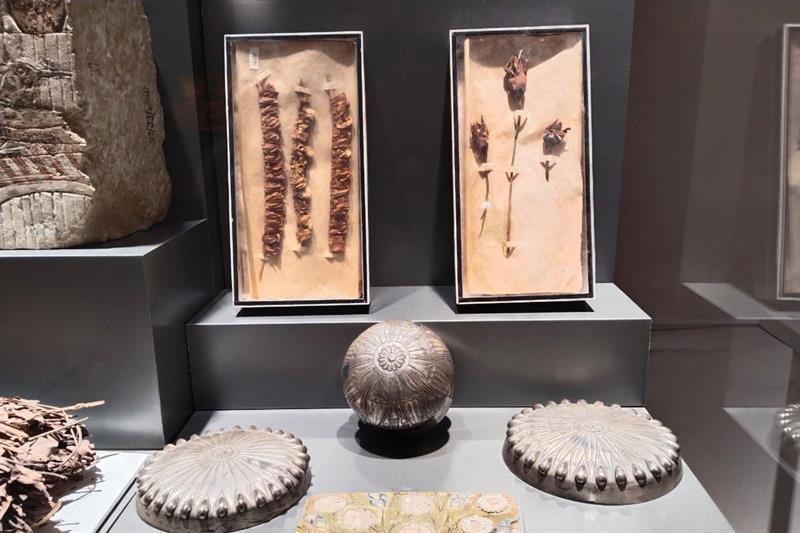
A Continuous Historical Timeline of Natural Perfumery (1691–Present)
The House of The Perfumist represents a documented, multi-century continuity of natural perfumery practice originating in the Ottoman Empire and preserved through successive generations. This timeline presents a factual account of the house’s development, technical evolution, and historical positioning within the broader history of perfumery.
1691–1720: Foundation and Early Practice
1691
Sayed Mehmet Al-Attar was born in Istanbul during the height of Ottoman scientific, commercial, and artisanal advancement. The Ottoman Empire at this time was a global center for medicine, chemistry, botany, and trade, with perfumery closely linked to pharmacology and religious practice.
1717
Sayed Mehmet Al-Attar married Zeynep. Their household became the foundation of a family-run perfumery lineage.
Circa 1720
The first documented workshop and perfume shop was established near the old bazaar of Istanbul. This location placed the house at the intersection of spice traders, silk merchants, physicians, and scholars.
Early compositions were built using the most valued natural materials of the era:
-
Rose
-
Musk
-
Sandalwood

These materials formed the core of Ottoman luxury scent culture and religious use.
Early–Mid 18th Century: Trade Expansion and Technical Refinement
During the early 1700s, the family expanded sourcing and trade routes to:
-
India (aromatic woods, resins, distillation knowledge)
-
North Africa (ambergris, spices)
-
The Balkans and Bulgaria (rose cultivation)
This period coincided with major technical developments in global perfumery, including:
-
Enfleurage
-
Maceration
-
Improved steam distillation
-
Early solvent extraction methods
While alcohol-based perfumes such as Eau de Cologne emerged in Europe, oil-based perfumery remained dominant within Ottoman and Middle Eastern cultures. The house maintained its focus on natural oils while adopting improved extraction efficiency.
The Historical Role of Attar in Traditional Perfumery
Long before modern mass-market Perfume existed, much of the world experienced fragrance through attar.
In many historical regions, attar was not viewed as luxury in the modern sense.
It was culture.
Daily life.
Memory.
Ritual.
Medicine.
And identity.
Across Ottoman, Persian, Indian, and broader Middle Eastern traditions, attar quietly moved through homes, mosques, gatherings, scholars, physicians, merchants, and rulers.
Different forms of attar served different purposes.
Some forms of attar were worn before prayer.
Certain attar preparations belonged to hospitality.
Other forms of attar were linked to scholarship, quiet reflection, travel, or ceremony.
Before modern Perfume, oil-based attar represented one of the most stable forms of personal fragrance.
Unlike alcohol-heavy structures, traditional attar often remained closer to the skin.
Slower.
Quieter.
More intimate.
This is one reason many people today still ask:
are attars safe?
Historically, this question rarely existed in the same form.
Because traditional attar was often built from familiar botanical materials, woods, flowers, resins, spices, and oils already integrated into daily life.
That does not automatically mean every attar was identical.
Not at all.
The quality of attar varied.
Materials varied.
Preparation varied.
And knowledge mattered greatly.
A skilled maker of attar understood proportion, aging, material behavior, and balance.
In many older traditions, poor attar preparation reflected poorly on the perfumer himself.
This is partly why older houses treated Perfume construction seriously.
An attar was not simply smell.
It represented discipline.
Craft.
Trust.
And continuity.
Even today, many discussions surrounding traditional Perfume eventually return to the same question:
are attars safe?
The answer often depends on materials, sourcing, preparation, concentration, and authenticity.
Historically, respected makers of attar understood this responsibility deeply.
Because trust mattered.
And in traditional perfumery, trust often lasted longer than trends.
Some houses adapted.
Some disappeared.
Yet certain forms of attar survived centuries precisely because people continued returning to them.
Not because of advertising.
Not because of visibility.
But because the experience itself remained meaningful.
A quieter form of Perfume.
A slower relationship.
A familiar memory carried through attar.
1736–1800: Generational Succession and Ottoman Rose Expansion
1736
Ahmet Al-Attar, the founder’s eldest son, formally joined the business.
Succession Line (birth years):
-
Ahmet Al-Attar – 1719
-
Mustafa Attar – 1764
-
Ahmet Al-Attar – 1810
-
Mehmet Al-Attar – 1854
Leadership passed sequentially through sons, preserving formulas, sourcing relationships, and production methods.
18th Century Industry Context
The Ottoman Empire oversaw the expansion of rose cultivation into the Balkans, particularly Bulgaria. This era established the region as a global center for rose oil and rose water production, enabling larger-scale natural distillation without industrial synthetics.
19th Century: Industrialization and Resistance to Synthetic Dependency
The 19th century marked the rise of industrial perfumery and the introduction of synthetic aroma molecules , including:
-
Coumarin (1884)
-
Vanillin (1889)
While many houses transitioned rapidly toward synthetic formulations, The House of The Perfumist deliberately retained a natural-oil foundation.
Succession Continues:
-
Kaseem Al-Attar – 1900
-
Abd al-Ghaffār Al-Attar – 1875
-
Abd al-Jabbar Al-Attar – 1920
The house evaluated synthetics cautiously, prioritizing material integrity and traditional construction over mass scalability.
The Transition Between Traditional Attar and Modern Perfume
The 19th century quietly changed the relationship people had with fragrance.
For centuries, attar remained one of the dominant forms of personal scent across many regions.
A person might own only one attar.
Sometimes two.
An attar selected carefully.
Used consistently.
Remembered personally.
But as industrial systems expanded, Perfume began changing.
Mass production became possible.
Distribution expanded.
Consistency improved.
New materials entered the world of Perfume.
And gradually, many traditional forms of attar began sharing space with modern structures.
This period created an unusual balance.
Old attar traditions continued surviving.
Yet modern Perfume moved faster.
More accessible.
More scalable.
Easier to distribute globally.
This shift also created new questions.
Questions still asked today.
Especially:
are attars safe?
Historically, many respected perfumers approached attar cautiously and seriously.
An experienced maker of attar understood material behavior.
Certain woods aged differently.
Certain flowers behaved differently.
Certain oils inside attar required patience.
And much like modern Perfume, quality depended heavily on knowledge.
Not simply ingredients.
This is important because historical attar was never one single thing.
Some attar compositions were soft.
Some deep.
Some floral.
Some dark.
Some spiritual.
Some personal.
And some designed specifically for rulers, scholars, physicians, and merchants.
In many older societies, attar often existed beside daily life naturally.
Before gatherings.
Before prayer.
Before travel.
Before receiving guests.
Even when modern Perfume expanded globally, many families quietly continued wearing attar.
Because memory remained stronger than fashion.
Familiar habits remained stronger than trends.
And familiar smell often remained stronger than novelty.
Even today, conversations surrounding traditional Perfume frequently return to the same question:
are attars safe?
The answer rarely comes from trends.
It comes from understanding.
Understanding sourcing.
Understanding formulation.
Understanding who made the attar.
And understanding the historical role attar played long before modern Perfume existed.
Because historically, attar survived not through mass marketing—
but through trust.
Quietly.
Across generations.
Long before the modern world changed how Perfume moved through society.
1922: Entry into Alcohol-Based Perfumery
1922
The first documented alcohol-based perfume experiment occurred.
The formulation remained predominantly natural, centered on:
-
Rose
-
Musk
Any synthetic components served structural support rather than replacing natural oils. This marked a controlled adaptation to modern perfumery without abandoning traditional values.
Why Traditional Attar Never Fully Disappeared
Even as modern Perfume expanded across Europe and eventually the wider world, something interesting quietly happened.
Traditional attar never disappeared.
It adapted.
In many regions, people welcomed modern Perfume while still keeping familiar forms of attar nearby.
A formal gathering might include Perfume.
A private moment might include attar.
A celebration might call for one form of fragrance.
A quiet memory, another.
This balance survived across generations.
Because for many people, attar represented something modern systems struggled to replace:
Continuity.
Many forms of attar felt personal.
Slower.
Closer.
More familiar.
Certain attar preparations remained close to prayer.
Others remained close to memory.
Some forms of attar quietly moved through homes for generations.
Not loudly.
Not commercially.
Simply consistently.
This is partly why conversations surrounding Perfume still return to traditional fragrance systems.
And often, people ask:
are attars safe?
The question itself is understandable.
Especially in a modern world filled with mass production.
But historically, respected makers of attar spent years understanding balance.
Not simply smell.
Balance.
How oils behaved.
How woods changed.
How age affected attar.
How skin responded.
How a Perfume remained stable over time.
Historically, poor attar reflected poorly on the maker.
Because trust mattered.
A respected house protected reputation carefully.
This is one reason many older forms of attar survived long after trends changed.
Because unlike fast-moving modern Perfume, many people developed emotional relationships with attar.
A familiar smell.
A familiar feeling.
A familiar rhythm of life.
Some people changed Perfume frequently.
But kept one trusted attar for years.
Sometimes decades.
Even now, many collectors of traditional Perfume quietly continue returning to attar.
Not because modern fragrance failed.
But because certain experiences remain difficult to replace.
The slower character of attar.
The intimacy.
The patience.
The way certain materials settle.
And perhaps—
the quiet feeling that some forms of fragrance were never meant to rush.
Which is why the question are attars safe? still matters today.
Not because history ignored responsibility—
but because historically, responsibility was often the foundation of trusted attar itself.
Mid–Late 20th Century: Preservation Through Global Industrial Shift
As global perfumery moved toward mass production, aldehydes, and corporate consolidation, the house maintained:
-
Micro-batch production
-
Direct sourcing relationships
-
Non-scalable formulations
Lineage Continues:
-
Mohammed Attar – 1961
-
Ali Attar – 1982
The focus remained on rare materials, traditional extraction, and preservation of undocumented techniques.
2018: Public Access and Global Reach
08 August 2018
Under Ali Attar, the house opened public access for the first time in its history:
-
English-language availability
-
Online distribution
-
International shipping to 20+ countries
Approximately half of the available inventory sold out on the first day. Subsequent releases continued selling out due to limited batch sizes and material scarcity.
2018–2020: Public Engagement and Education
-
Public giveaways totaling over $100,000 in oils and products
-
Direct educational engagement with the global perfume community
Why Questions About Attar Continue Growing
As information became easier to access, something unusual started happening.
More people became curious about traditional fragrance.
Not simply modern Perfume.
But older systems.
Older materials.
Older philosophies.
And naturally, many people rediscovered attar.
At first, curiosity often begins simply.
Someone hears about attar.
Someone smells an attar for the first time.
Someone notices how different certain forms of Perfume feel when compared with traditional oil-based fragrance.
And eventually—
questions begin.
What exactly is attar?
Why does attar feel different?
How old is attar really?
And increasingly—
are attars safe?
This question appears more today than perhaps ever before.
Not because attar suddenly changed.
But because modern consumers ask more questions.
And that is a good thing.
Historically, trusted makers of attar expected curiosity.
An informed person usually appreciated attar more deeply.
Because traditional attar was rarely simple.
One attar might contain woods.
Another flowers.
Another herbs.
Another resins.
Some forms of Perfume remained soft.
Others more intense.
Certain attar preparations evolved slowly over time.
Others remained stable.
And much like historical Perfume, knowledge mattered greatly.
This is why education became important.
Because discussions surrounding attar often become oversimplified.
Some people assume all attar behaves the same.
It does not.
Some assume every traditional Perfume follows identical standards.
It never did.
And some ask:
are attars safe?
The answer often depends on who created the attar, what materials entered the Perfume, how responsibly it was prepared, and whether quality remained part of the process.
Historically, respected perfumers understood something important:
Trust mattered more than speed.
A careless attar harmed reputation.
A poorly made Perfume weakened trust.
And trust, once lost, rarely returned quickly.
Perhaps this is one reason attar continued surviving quietly across centuries.
Because unlike fast-moving trends, many people returned to familiar systems.
Familiar rituals.
Familiar Perfume.
Familiar attar.
And eventually—
to questions worth asking.
Like:
are attars safe?
Because historically, asking better questions often led people toward better understanding.
2023–2025: Knowledge Preservation Initiatives
The house released three major works, all free and uncopyrighted:
-
The Art of Incense (2023, 10,000+ downloads)
-
The Master Manual of Natural Perfume Oils (2024)
-
The Complete Ancient Perfume History (2025)
These publications represent one of the largest open-access contributions to modern perfumery education.
Why The Question Still Matters
In recent years, something interesting has quietly happened.
People stopped asking only what smells good.
They started asking better questions.
What is inside this Perfume?
Who made this attar?
How old is this tradition?
Why does one Perfume feel different from another?
And increasingly—
are attars safe?
Historically, this question would have sounded unusual.
Not because people ignored quality—
but because trust worked differently.
A respected maker of attar depended on reputation.
An unreliable attar damaged credibility.
A careless Perfume damaged relationships.
And relationships often lasted generations.
In many older traditions, attar moved through families quietly.
A father introduced an attar to a son.
A teacher shared a familiar Perfume.
Certain forms of attar became associated with prayer.
Others with guests.
Others with memory.
Some people kept one trusted Perfume for years.
Others remained loyal to the same attar for decades.
This is part of why traditional fragrance survived.
Not because attar was fashionable.
Not because every Perfume remained unchanged.
But because familiarity mattered.
Consistency mattered.
Trust mattered.
Even today, many people exploring traditional Perfume eventually discover something surprising:
The relationship feels slower.
Certain forms of attar reveal themselves gradually.
Some materials inside Perfume feel softer.
More intimate.
Less aggressive.
And often—
more personal.
This does not mean every attar is identical.
Far from it.
Different materials behave differently.
Different makers approach Perfume differently.
Different traditions shaped attar differently.
Which naturally leads many people back to the same question:
are attars safe?
Historically, respected perfumers understood that trust required responsibility.
The best attar makers cared deeply about material integrity.
The best Perfume makers protected consistency carefully.
Because ultimately—
fragrance was never only smell.
It was memory.
Craft.
Reputation.
And trust carried quietly through time.
Perhaps that is one reason attar still survives today.
Not loudly.
Not everywhere.
But steadily.
One Perfume.
One tradition.
One trusted attar at a time.

Historical Reconstructions and Technical Achievements
-
Reconstruction of Kindi al-Ghaliyah
-
Reconstruction of biblical sacred incense formulas
-
Recreation of historically documented intelligence-era scents
-
Introduction of lab-tested and certified Kinam/Kyara wood and oil
-
Creation of over 100 authentic deer musk compositions
Why Historical Attar Knowledge Still Matters Today
Modern Perfume moves quickly.
New launches appear constantly.
New trends arrive.
New formulas rise and disappear.
But historical attar knowledge often moves differently.
Slower.
More carefully.
Because traditional attar was rarely treated as temporary.
In many older systems, attar represented accumulated understanding.
Understanding of woods.
Flowers.
Resins.
Extraction.
Aging.
Balance.
And patience.
Some forms of attar required extraordinary time.
Certain materials inside attar behaved unpredictably.
Some changed with climate.
Others changed with age.
And certain forms of Perfume improved only after resting.
This is one reason historical houses often documented methods carefully.
Because knowledge protected quality.
And quality protected trust.
Today, many people returning to traditional Perfume often discover something unexpected.
Modern speed does not always create deeper connection.
Sometimes slower experiences remain stronger.
This partly explains renewed interest in attar.
A growing number of people quietly return to traditional systems searching for something less rushed.
Something more grounded.
Something more intentional.
And naturally—
questions continue appearing:
are attars safe?
Historically, respected makers of attar never ignored such responsibility.
An experienced maker understood proportion.
Purity.
Material strength.
Skin behavior.
And how an attar behaved over time.
Just like historical Perfume, not every preparation followed identical standards.
Quality mattered.
Source mattered.
Knowledge mattered.
Some attar survived centuries because care remained part of the process.
Because trust remained part of the process.
Because people returned repeatedly to the same attar.
The same feeling.
The same memory.
The same quiet familiarity difficult to explain.
Even now, many people exploring historical Perfume eventually rediscover something surprisingly old:
A slower relationship with smell.
A quieter relationship with materials.
And often—
a growing appreciation for attar itself.
Not simply as fragrance.
But as history still quietly surviving.
Which is partly why the question are attars safe? continues mattering today.
Because understanding fragrance often begins by understanding where fragrance came from.
Present Day
The Return of Traditional Attar in the Modern World
Something interesting has quietly happened over the last decade.
While modern Perfume continues expanding globally, many people have slowly begun returning to older fragrance traditions.
Not out of nostalgia alone.
But curiosity.
A growing number of people want to understand where fragrance came from.
How earlier generations experienced smell.
Why traditional attar survived so long.
And why certain forms of Perfume feel fundamentally different from others.
For many, the journey begins unexpectedly.
A single attar sample.
A familiar feeling.
A softer experience.
A slower relationship with fragrance.
And gradually—
interest grows.
People begin asking questions.
How is attar made?
Why does attar feel closer to skin?
Why does certain Perfume evolve differently?
And increasingly—
are attars safe?
The question matters.
Especially in a time where people care more about sourcing, transparency, and material quality.
Historically, respected makers of attar rarely treated responsibility casually.
A trusted attar represented reputation.
A trusted Perfume represented care.
Poor preparation weakened trust.
Good preparation strengthened it.
This is partly why many older traditions surrounding attar survived centuries.
Because trust remained central.
Even today, some people discover attar after years of wearing modern Perfume and quietly notice something different.
Not better.
Not worse.
Different.
More personal.
More patient.
Certain forms of attar move slowly.
Certain forms of Perfume remain intimate.
And certain materials reveal themselves gradually rather than immediately.
This slower rhythm surprises many people.
Especially in a culture built around speed.
Immediate impressions.
Instant opinions.
Quick replacement.
Yet traditional attar often asks something different:
Patience.
Attention.
Time.
And perhaps—
that is partly why many conversations about fragrance eventually return to the same question:
are attars safe?
Because people are not simply asking about materials.
They are asking whether older systems still deserve trust.
Historically—
the best makers of attar believed trust had to be earned.
Quietly.
Over time.
One Perfume at a time.
One attar at a time.
Today, The House of The Perfumist operates as:
-
A documented continuous perfumery lineage (1691–present)
-
A producer of non-scalable, micro-batch natural perfumes
-
A custodian of rare oils historically owned by rulers and heads of state
-
A public educator dedicated to preserving ancient perfumery knowledge
The house remains defined not by branding or volume, but by continuity, material authenticity, and historical accountability.
- Ali Attar