تفضل بزيارة مكتبتنا وقم بتنزيل كتب إلكترونية حصرية مجانية — انقر لاكتشافها وابدأ القراءة.
What Does Cambodian Oud Smell Like?
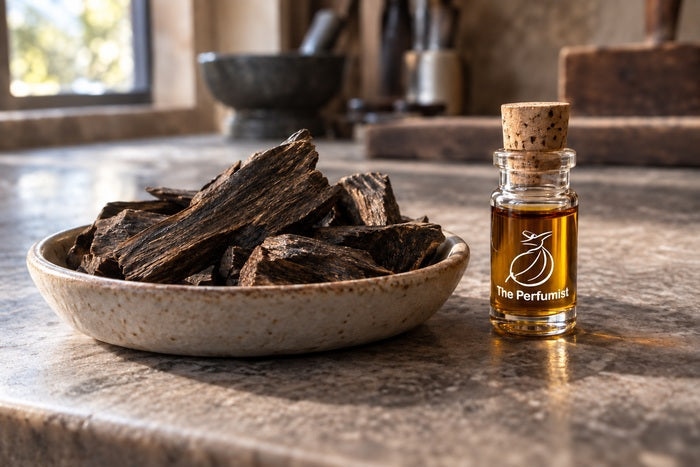
What does Cambodian Oud Smell Like?: Beginning with the sample
Cambodian oud is often described through fruit-like sweetness, warm resin and wood, sometimes with leathery, smoky or animalic edges. I use those words as a starting vocabulary, not a promise for every bottle. The useful question is what your particular sample reveals as its opening settles into the drydown. For botanical context alongside What does Cambodian oud smell like?, Kew records Aquilaria crassna as native to Cambodia and neighbouring countries.
When I return to the sample, I note which impression arrives first and which remains later. The wood photographs provide material context, while the scent description must come from smelling the actual oil.

The wood gives the oil its starting material, but a photograph cannot give me the fragrance. I smell the sample before deciding whether fruit, dryness or resin is its strongest feature. Dark grain can be visually striking without answering any of those questions.

Sorting samples is useful because two pieces of aromatic wood need not produce the same impression. I would keep the batch names attached to the comparison from the beginning. Mixing the identities together makes it easy to turn one memorable smell into an unsupported statement about a whole country.

Our archived Cambodian sampler puts several named oils side by side. I would compare their development individually, keeping the labels with the notes rather than treating the regional name as one fixed smell. The archived sampler descriptions offer specific examples for What does Cambodian oud smell like?.

I keep a comparison set together with its identifying information. The archived sampler package makes that practical point visible: after testing, each vial should return to its own label so the next session starts with the same known samples.

Fruit-like impressions without a fixed formula
The fruit, honey, spice and resin photographs in this guide are sensory references. They help explain descriptive words; they are not a recipe for oud oil or proof of the contents of a particular bottle.
Dark fruit is a comparison that can help someone describe a Cambodian oud sample. A cherry-like impression suggests a rounded, juicy sweetness rather than literal cherries in the oil. If that impression is absent, I would record what the sample actually gives me instead of forcing it into a regional description.

Raisin-like and fresh-fruit-like are not quite the same impression. Dried fruit suggests a more concentrated sweetness, and it can help explain an oud sample that feels rich without smelling like a sugary perfume. The distinction is useful vocabulary; it cannot identify the oil’s country or prove how it was distilled.

Fresh plum and dried plum give me two different reference points for fruity oud. The fresh fruit suggests a juicier, brighter impression, while the dried reference feels denser. A sample can remind me of either, neither, or something between them; I use the words to make the comparison clearer, not to impose a promised flavour.

The archived CAM REMARKABLE description uses strawberry among its comparisons. I read that as a bright red-fruit impression in that particular sample, not a promise that every Cambodian oil smells of strawberries or contains fruit.

CAM REMARKABLE also received a wine comparison in the archived sampler notes. This is useful vocabulary for a rounded fermented-fruit impression; it does not establish that wine or alcohol was added to the oud oil.

Warmth and resin as scent references
When I use resinous as a description, I mean an aromatic impression rather than a visible ingredient list. Frankincense gives a familiar comparison for one resin character, but oud is not frankincense. The reference helps describe a facet without claiming that these resin pieces were added to the oil.

For warmth, cinnamon is an easy reference to remember. Its spicy character is more specific than simply calling a scent warm. If an oud feels rounded but does not suggest that spice, I keep warm in my notes and leave cinnamon out.

Vanilla is a familiar reference for a rounded kind of sweetness. Fruit-like sweetness can feel quite different, and an oud may suggest neither comparison clearly. I choose the description that makes the sample easier to recognise rather than collecting every pleasant association.

Honeyed describes a soft, rounded sweetness that may sit behind the fruit impression in some Cambodian oud. It does not mean the oil contains honey or shares its texture. I keep sweetness and thickness as separate observations, because looking at a slow-moving liquid cannot tell me what it will smell like.

Leathery is a texture-and-aroma comparison that some oud samples suggest as the sweeter opening settles. These leather samples make the reference concrete; they are not ingredients in the oil. I would distinguish a supple leather-like depth from harshness, rather than assume any strong animalic impression means better oud.

A mossy description can help me separate a cool, earthy undertone from the sweeter fruit at the opening. The moss here is a visual reference for that impression, not evidence that moss was added to the oil or that it came from this landscape.

The CAM RARE notes include green leaves and grass alongside honey. That contrast matters: Cambodian oud can have a greener edge rather than remaining uniformly dark and sweet. The grass here illustrates the comparison, not the plant used to produce oud.

The archived CAM RESTRICTED notes include tobacco. I use that description to distinguish a dry leaf-like impression from the sharper smell of smoke; it is a comparison for the named oil, not evidence that tobacco was added to it.

Chocolate appears in the CAM RESTRICTED sample description. A cocoa-like impression can help explain the darker side of sweetness without making an oil smell like a dessert. The chocolate shown here is a reference for that description, not a pictured ingredient of the oud.

A nutmeg comparison appears in the CAM REMARKABLE notes. I would use it for a warm, dry spice impression rather than assume that the oil contains spice. Thinking of freshly grated nutmeg helps separate this reference from the sweeter cinnamon comparison used elsewhere.

The CAM RESTRICTED description includes lotus among its floral comparisons. This adds a lighter point of reference to its darker tobacco and chocolate notes. I treat that wording as the writer’s impression of one sample, not proof of lotus extract in Cambodian oud.

Rose also appears in the archived CAM RESTRICTED notes. A floral impression can sit behind the wood rather than turn the whole oil into a rose perfume. The flower shown here explains that comparison; its colour and variety do not identify an ingredient in the sample.

The archived CAM RESERVE description included a dusty stone-and-earth impression. I would keep that separate from the greener, damp suggestion conveyed by moss: both can be called earthy, but they point the reader towards different textures. This dry ground is a visual comparison, not a Cambodian growing site or an ingredient of the oil.

Reading wood without inventing a grade
Woody becomes more useful when I add a second word: dry, rounded, smoky or resinous. Dry suggests a different impression from sweet, polished wood. Choosing the closer description helps someone understand the sample without calling every attractive oud rich or luxurious.

Sweetness and dryness can sit together in one oil. I might notice a rounded opening while the woody background feels dry, then notice more of that background as the opening settles. These are separate qualities, so I record their balance rather than put the whole sample into one box.

Smoke is one possible facet
A smoky facet in an oil is not the same experience as burning aromatic material. Combustion adds its own character, while the bottled oil is evaluated without that process. I keep those two references apart when deciding whether a sample feels gently incense-like, strongly smoky or mostly woody.

A smoky facet in an oud oil is not the same experience as burning incense. The smoke here is a comparison for that impression, not a photograph of Cambodian agarwood. I evaluate the oil without nearby smoke so that the room does not supply a note I then mistakenly attribute to the sample.

A dry, charred impression is different from the rounded warmth I mean by resinous. I use burned wood as a reference for that contrast, not as evidence that a sample was scorched during distillation. The charcoal shown here is not identified as agarwood, and smell alone cannot reconstruct a production method.

Where the material story helps
Aquilaria crassna is one botanical name relevant to this discussion, and its native range includes Cambodia as well as neighbouring countries. That makes the species useful background, not a country certificate. A labelled tree in a botanical collection cannot establish the origin of the oil in a seller’s bottle. Kew’s botanical record provides useful background when asking What does Cambodian oud smell like?.

A cross-section shows how uneven a piece of wood can look. That is useful material context; it is not a scale for sweetness or lasting power. For those qualities, I return to the finished oil and follow its development.

Preparation belongs in the batch story because the maker has choices before the oil reaches its bottle. I ask for the actual process rather than fill in a romantic account from the regional name. The sorting scene is an illustration of material handling, not evidence of a particular Cambodian facility.

Wood preparation and perfume evaluation are different activities. The craft scene explains why a material can go through several handling stages, but it does not tell me the final scent. I would connect any process claim to the producer’s account of that batch, then compare it with what the sample actually does.

If a maker describes soaking or fermentation, I ask what that means for this specific batch. I would not automatically explain every sour, ripe or animalic impression by that one stage. Similar descriptive words can occur in different oils, so a scent impression alone does not reconstruct the production history.

A drying scene can make the preparation sequence easier to picture, but the scent still needs its own assessment. I separate information the producer documents from changes I merely imagine. An attractive account of the process should help explain the sample, not replace the experience of smelling it.

Distillation provides a useful distinction between smelling wood and smelling a collected oil. This glass apparatus is a general process reference, not a traditional Cambodian still. I ask the seller about the actual extraction method when it is relevant, rather than assuming that every oud oil followed an identical route.

Dried plum is another useful reference when an opening feels dense and sweet rather than bright and fresh. The fruit here is a sensory comparison, not an ingredient list. I would use the comparison only if it fits the oil in front of me, then return to the blotter to see whether that impression lasts.

Cambodian tells me where to begin asking questions, not what every bottle must smell like. This landscape is in Kompong Speu, Cambodia; it is a geographical reference, not a pictured oud plantation. For a particular oil, I still want the seller to identify the batch and explain what its origin claim means.

A careful evaluation starts with attention, not a long list of impressive notes. I first ask which impression is strongest, then whether it changes after I step away and return. This fragrance-evaluation scene illustrates that patient approach; it does not identify the sample in the glass.

This Cambodian agarwood piece comes from our material archive. Its shape helps show the wood behind the subject, while the scent of an extracted oil still needs a separate assessment.

The exposed end face shows a different surface from the darker outside. I use the two views to explain why a wood photograph needs context; neither view tells me the sweetness or drydown of a finished oil.

Following the opening into the drydown
I start with a labelled paper strip and a restrained amount, following the supplier’s handling guidance. I note the first impression in ordinary words before reading a long description. This helps me notice what is actually prominent rather than search for every attractive note somebody else has listed.

The opening can be vivid without describing the whole oil. I return to the same strip after it has settled and ask what has become clearer or quieter. A fruity first impression may stay central, change its balance with the wood or become much less noticeable.

Two separate strips let me compare a fresh application with one that has had more time to develop. I label them clearly so I do not confuse age with dose. The point is to follow the same sample through time, not to force it into a fixed three-stage perfume pyramid.

When several oils are being compared, I take pauses and keep their identities clear. Moving rapidly between strong samples can make subtle differences harder to describe. I would rather record a few useful contrasts and return later than produce a long note list from one crowded smelling session.

A useful comparison changes one thing at a time. If I want to understand development, I compare the same oil at different elapsed times; if I want to compare batches, I use similar timing. Otherwise the difference may come from the way I tested them rather than from the oils themselves.

A timer helps me compare the opening with the later scent without relying on memory of how long I waited. I note the first impression, return after a short interval, and revisit the drydown. Those times organise the comparison; they are not fixed stages that every Cambodian oud must follow.

The CAM RARE drydown was compared with clean white linen in the archived sampler notes. I use that wording for a clean, soft impression rather than a claim about laundry ingredients. It also helps distinguish the later stage of that particular sample from its earlier green and honeyed descriptions.

Keeping useful sensory notes
My notes are short: the first impression, the later impression and anything uncertain. Beside fruity, I might write fresh or dried; beside smoky, gentle or sharp. Those small distinctions are easier to use later than a long list of possible notes.

The amount used and the words chosen both matter. Similar applications make the comparison easier, while precise language helps explain the difference. I record the handling separately from my impressions so another session has a useful starting point.

Bottle volume tells me how much material is supplied, not how concentrated, authentic or powerful it must be. That distinction matters when two samples seem unequal in strength. Before deciding that one regional style is more intense, I check what products and amounts are actually being compared.

An unidentified sample is difficult to learn from, however interesting it smells. I keep the seller’s batch name, product type and my own notes together. That gives me a chance to return to the same material, rather than buy a different bottle under a familiar regional label and expect an identical result.

The amount on a strip affects how forcefully I experience the opening. I use similarly small amounts when comparing two samples, rather than mistaking a heavier dose for a richer oil. The dropper illustrates controlled handling; the colour of the liquid cannot establish whether it is Cambodian oud.

A blank page is enough for a useful first comparison. I write the sample name, the time, and the strongest impression in my own words before reading a long seller description. Later notes show whether my first idea of dark fruit or warm wood still fits the drydown.

I would choose a Cambodian oud by how its drydown suits the wearer, not by assuming that woody or leathery notes belong to one gender. With a product intended for skin, a small trial following its directions is more useful than a label such as masculine or feminine. This is a general application photograph, not a pictured Cambodian oil or an endorsement by the model.

When comparing Cambodian samples, I keep each bottle tied to its own name or code. A remembered colour is not enough to distinguish two oils. The handwritten tags in this general fragrance-material photograph illustrate useful organisation; the pictured contents are not presented as Cambodian oud.

Two people can describe the same Cambodian sample differently without either description being dishonest. I ask each person to write a short first impression before sharing notes, so one vivid suggestion does not become everyone’s answer. This general fragrance photograph illustrates sharing impressions, not a test of a pictured Cambodian product.

Oil, attar and perfume are different comparisons
A small bottle can contain a natural oud oil, a diluted preparation or a composed perfume oil. I want that distinction clear before discussing the smell. The phrase Cambodian oud on a label does not by itself explain whether the contents are one extracted material or a blend built around an oud theme.

A finished spray perfume may interpret Cambodian oud through added floral, woody, sweet or musky notes. That can be enjoyable on its own terms, but it is a different question from describing a natural oil. I ask which product the reader means before offering a scent comparison.

The applicator affects how a product is handled, not which region its materials come from. A roller bottle can be convenient for an oil perfume, but the packaging cannot identify its formula. I keep the application method separate from the scent family and the seller’s provenance information.

The archived CAM RIP was explicitly described as an oud composition with rose, patchouli and incense. That is a different category from an oil whose natural aroma merely reminds someone of these materials. The labelled patchouli plant makes this distinction concrete: a named added material and a descriptive scent comparison are not interchangeable.

Trying a sample with a restrained amount
More material is not always a more useful test. I begin with the amount advised for the finished product and avoid treating intensity as a competition. A restrained comparison gives me room to notice whether the impression is rounded, sharp, sweet or dry, instead of recording only that it is strong.

A drop is a convenient visual idea, but it is not a universal measure: applicators and liquids differ. When I compare two samples, I keep the handling as consistent as practical. I would not infer a concentration difference from two casual applications that may have used very different amounts.

Smelling directly at an open bottle and smelling a prepared strip are different situations. I do not expect them to provide identical impressions. For a useful description, I state how the sample was evaluated and return to the same approach when comparing another batch.

Colour is easy to notice and easy to overinterpret. A darker liquid does not prove that the oud will be sweeter, older or stronger. I use the actual scent and the product documentation together, leaving colour as a physical observation rather than a shortcut to authenticity.

After the blotter, I try a small amount on clean skin only if the product is intended for skin use. I leave that spot alone and revisit it later, watching whether the fruit stays rounded or gives way to drier wood. Applying more immediately would make that comparison harder.

I begin a skin comparison without yesterday’s fragrance or a strongly scented hand cream at the test spot. After washing, I let my hands dry and wait until any cleanser smell has settled. Otherwise a clean, soapy impression may belong to the wash rather than the oud.

Keeping the comparison consistent
I keep the batch name beside the smelling notes. Several small bottles can look almost identical after a few days, especially when their labels use similar regional names. A clear record lets me return to the sample whose later woody stage I enjoyed.

I close the sample after use and follow its storage guidance. The aim is to keep my comparisons as consistent as possible, not to assume that time automatically improves the oil. If a seller makes an ageing claim, I want it attached to a documented batch rather than inferred from a dark bottle.

I keep the bottles organised and follow their storage directions between sessions. Before smelling again, I check the label and my earlier notes. That simple routine prevents a changed sample or mistaken bottle from becoming an invented story about how Cambodian oud develops.

If repeated smelling stops giving me a clear impression, I pause the comparison instead of reaching for another sample. I step away from the bottles and return later, noting that interruption alongside my observations. This open window is a reminder to take that break; it does not promise to reset the nose or prove anything about the air in the room.

Choosing the batch rather than the story
A regional collection is most useful when each bottle remains an individual example. One sweet sample and one drier sample can both challenge an oversimplified description of Cambodian oud. I prefer those concrete comparisons to ranking whole countries from the strongest or most memorable oil I happened to encounter.

Before choosing a larger amount, I ask whether the available bottle comes from the same batch as the sample. I also want the product type and claimed origin stated clearly. A descriptive name is useful, but the batch information makes the description something I can actually return to.

Sometimes a fruity impression has a tangy, fermented edge instead of simple sweetness. Fermented fruit is a useful comparison for describing that contrast. This photograph shows fruit fermentation, not oud production, and a fermented scent impression alone cannot tell me how an oil was made.

I avoid adding a strong coffee aroma to the room while judging the quieter stages of an oud sample. If my impressions become confused, I step away and return later. The aim is to hear the oil more clearly, not to keep introducing other smells between repeated sniffs.

I would choose the sample whose whole development I enjoy, including the quieter later stage. A regional description can point me toward a style, but it should never override what the oil actually offers. Clear notes and a clearly identified batch make that choice easier to explain and repeat.
-Ali Attar